Safiery at METSTRADE 2026

Amsterdam · RAI · Nov 17–19 2026 · Stand 5.419

METSTRADE 2026

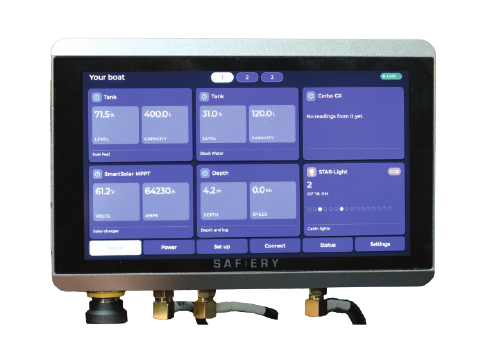
Safiery branded products: power conversion, digital switching, tank monitoring and lithium batteries that are either native to or compliant with Victron Energy systems. All controllable from a Victron touch display.

Quasar products are AI enabled to deliver across all brands:

  • For the Boat Builder: high productivity and confidence with error free engineering and programming.
  • For the Boat Owner: Customised 3D animated displays with vessel health, instant pre-check button all on mobile phone. Remote control if enabled locally.
  • For the Boat Owner: high availability once on the water; with no surprises using predictive maintenance, day before trip pre-checks, vessel log and issue to resolution digital paper trail that stays embedded in the vessel log.
  • For the Boat Builder: log of issues during warranty with tracking, fleet performance by device, revenue stream share from subscriptions.

Quasar Glass can natively add to Victron Bluetooth only devices - zero engineering - or Victron Cerbo GX as additional 4in, 7in or 10in screen. Victron systems can be programmed with AI remotely if a CAN BMS battery is present.

Book a meeting at the stand. Tell us about your build and we’ll set a time to talk with the Safiery team at Stand 5.419.

See what’s on the stand
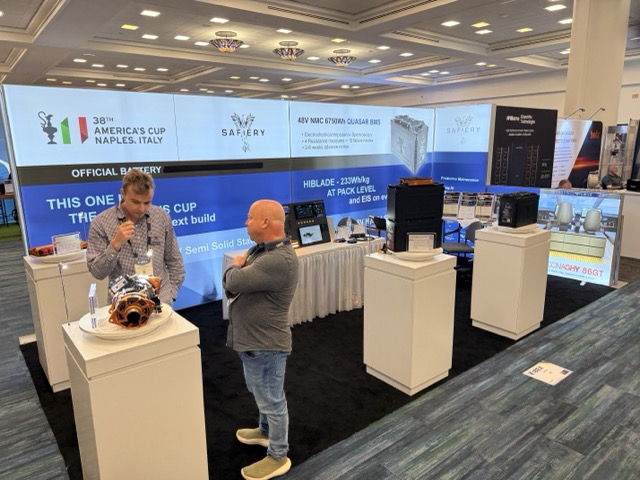
The Safiery stand at IBEX 2026, with the America's Cup official battery wall, the 48V BMG and HiBlade battery on display
The Safiery stand at IBEX 2026, Tampa

The Past

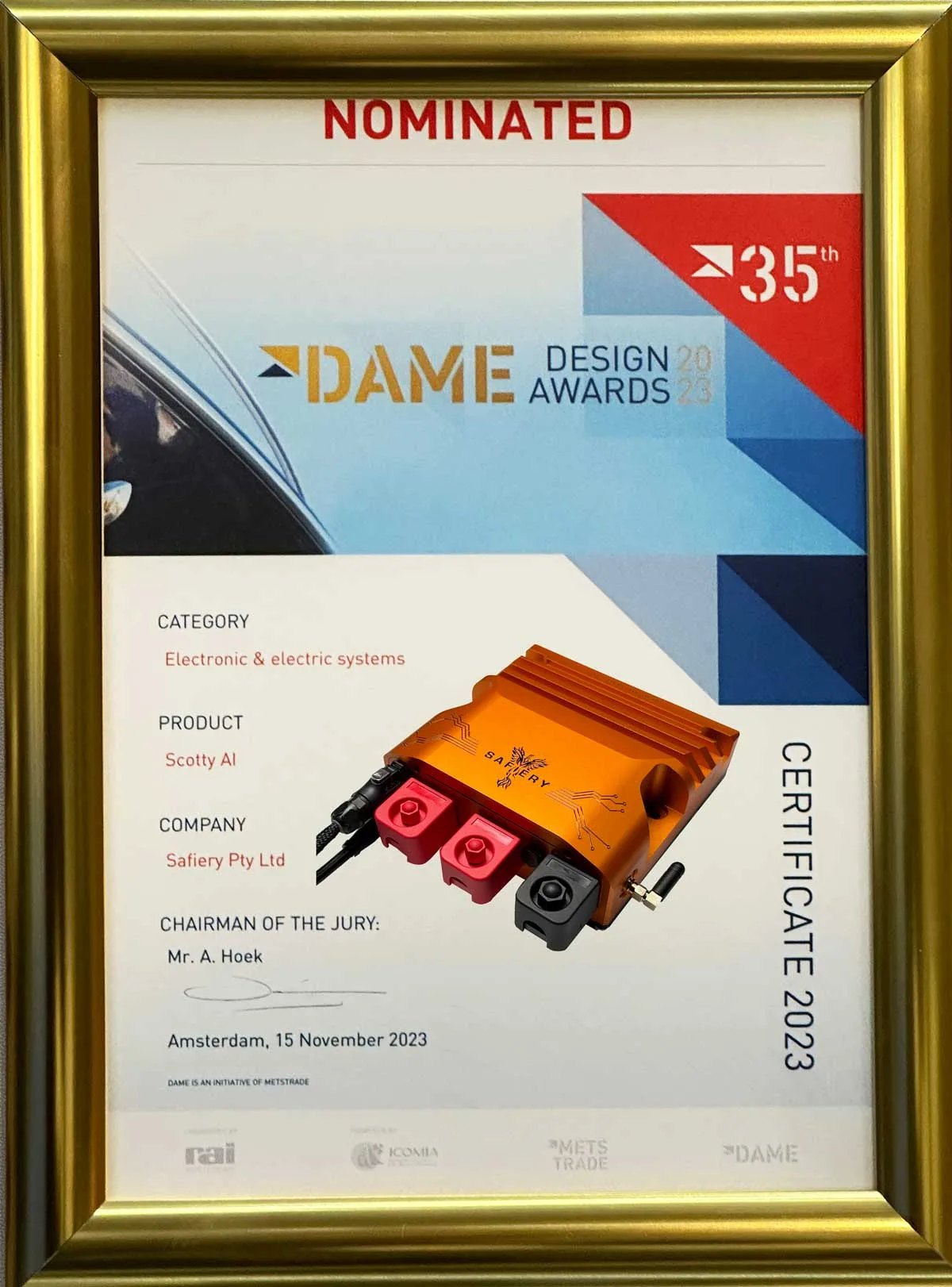
Scotty AI's DAME Design Awards nominee certificate

Scotty AI is a DAME Award nominee in 2023.

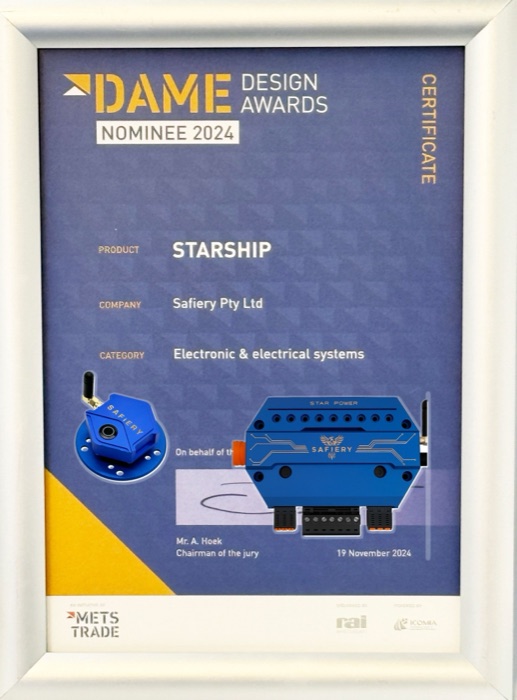
DAME Design Awards nominee 2024 certificate for Safiery's STARSHIP, electronic and electrical systems category

STAR Range is a DAME Award nominee in 2024.

The Present

38th America's Cup Naples, Italy and Safiery: Official Battery
Safiery is the official exclusive supplier of lithium batteries to the 38th America’s Cup, Naples 2027.

The Future

Quasar Concierge and Quasar Care are two services by Safiery AI agents that provide:

Quasar Concierge

Your boat set up by an expert, from your phone, in minutes

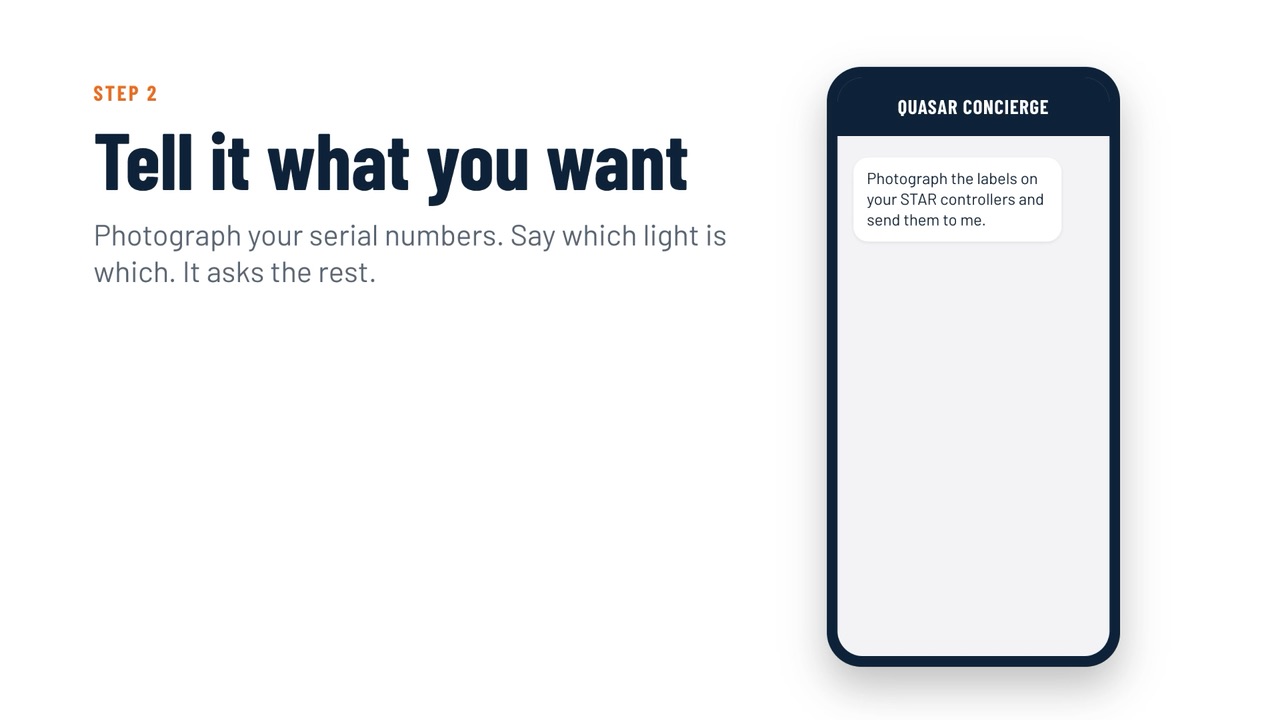
Photograph your serial numbers, say which light is which, and Quasar Concierge asks the rest.

Quasar Concierge: an expert sets up your boat from your phone by chat, in minutes

Quasar Concierge: High productivity and error free engineering and programming

Program a boat in under an hour

An AI agent portal for boat builders programs hundreds of digital switching and Victron Energy devices in less than an hour, with no errors. It can all be done off the vessel.

Your vessel in animated 3D

An AI agent portal for vessel owners turns photos of their vessel into an animated 3D display, built to their specification with the digital switching placed on it.

Quasar Care: High availability once on the water, with no surprises, using predictive maintenance, day before trip pre-checks, and a vessel log with an issue to resolution digital paper trail that stays embedded in the vessel log.

Predictive maintenance in the digital twin

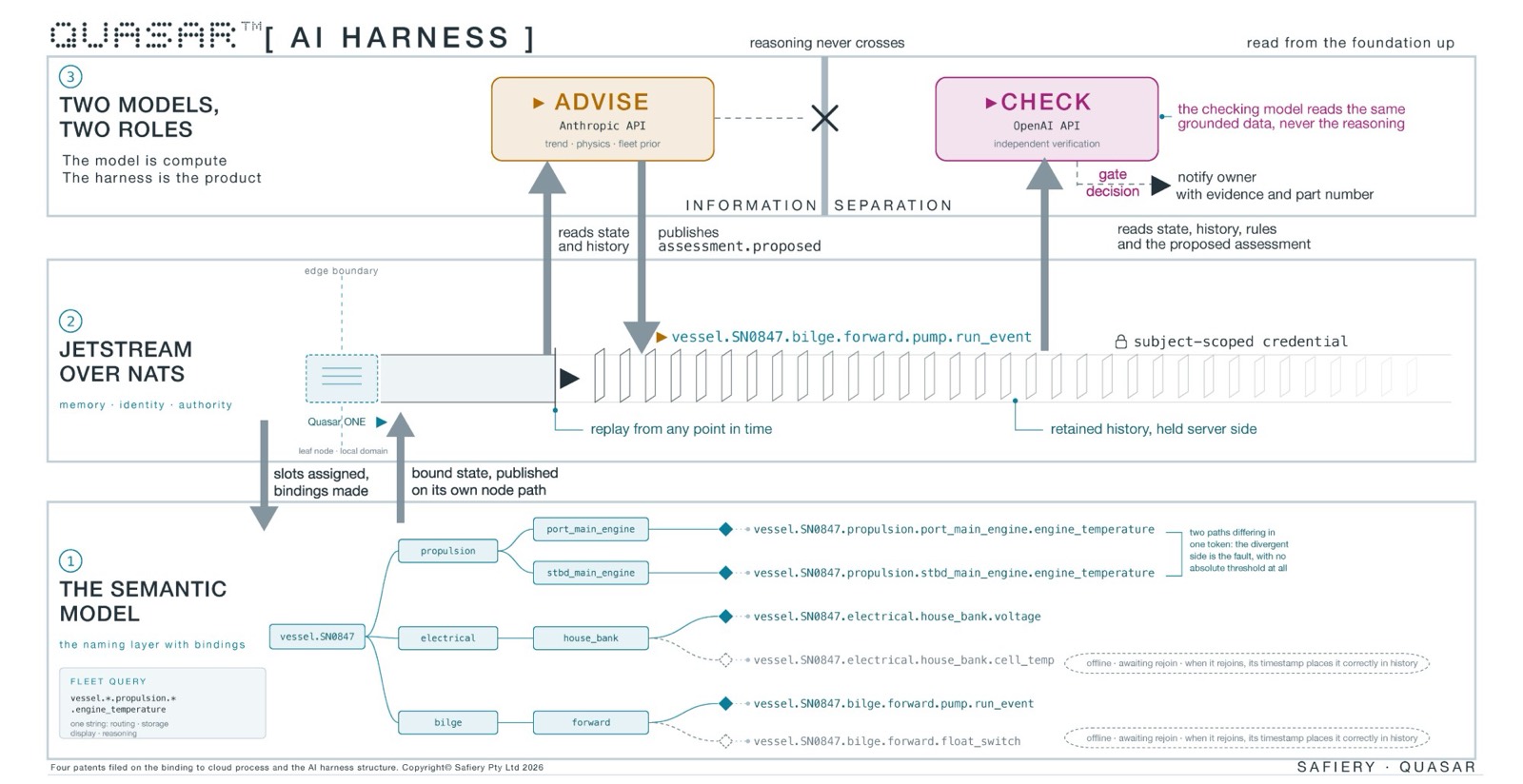
Agents read data from hundreds of sensors and NMEA 2000 values through a semantic model into a digital twin in the cloud. Up to 60 predictive maintenance scenarios and drifting sensor values are analysed every 15 minutes, with health reports sent to the owner and service agents.

Weeks of warning from the battery

AI agents read four resistance values from each cell group in the HiBlade lithium battery, giving 2 to 8 weeks’ notice of up to 15 failure modes. Critical stages trigger battery protection mode immediately; advance warnings are sent ahead.

Day before trip pre-checks

The day before a trip, agents run every circuit and check the boat’s health, so you cast off with no surprises.

An integrated vessel log for higher resale value

Every report, alert, owner check, technician action and fix is recorded from report to resolution in the vessel log. That audit trail stays with the boat, and an integrated vessel log raises its resale value.

Quasar Care

Quasar CARE catches it before the alarm

Starboard engine, Tue 29 Sep 2026. Resolved at the marina before departure.

1 · Every device, one place
  • NMEA 2000Engines · GPS · AIS
  • VictronBatteries · Solar · Cerbo GX
  • CZoneDigital switching
  • Other sensorsBilge · Tanks · Raw water
Quasar ONE Check 41 of 60 · every 15 min
2 · An agent reads the Quasar Twin vessel.SN0847.propulsion.stbd_main_engine.exhaust_temperature Alarm limit 90 °C
PortStarboardBoat’s own baseline

All systems normal against this boat’s history.

3 · Owner, service agent, vessel log
Quasar ONEOwner’s phone09:44 · Message to owner

Health check passed. Nothing to report.

Starboard engine: raw water flow is dropping. Strainer check recommended before you depart.

  1. Agent alert: exhaust temp rising for RPM
  2. Owner asked to inspect strainer
  3. Technician remote login, data checked
  4. Owner report: strainer blocked, cleaned
  5. Exhaust temp back to baseline
  6. Impeller change booked for next service
  • 60 AI health checks
  • 15 min between checks
  • 12 languages by voice
  • Operates with or without internet
Quasar Care

Quasar Care - Pays Three Ways

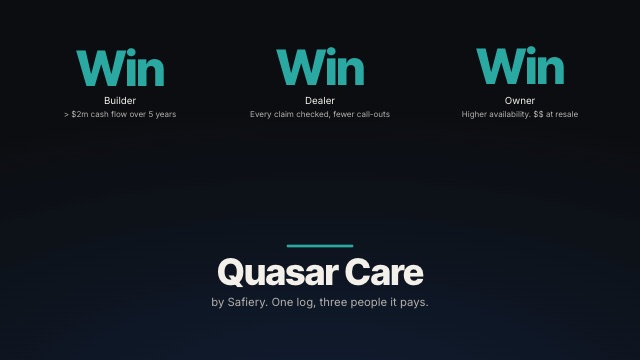
Quasar Care animation: one vessel log follows the boat from builder to dealer to owner, ending in a win for each - builder cash flow, fewer dealer call-outs, and higher owner availability and resale value
Our 4th METSTRADE · Stand 5.419

On the stand

Every product below will be on Stand 5.419. Full specifications, application notes and pricing are in the October 2026 product brochure.

Download the brochure (PDF, 20 MB)

Power generation Victron Energy compliant

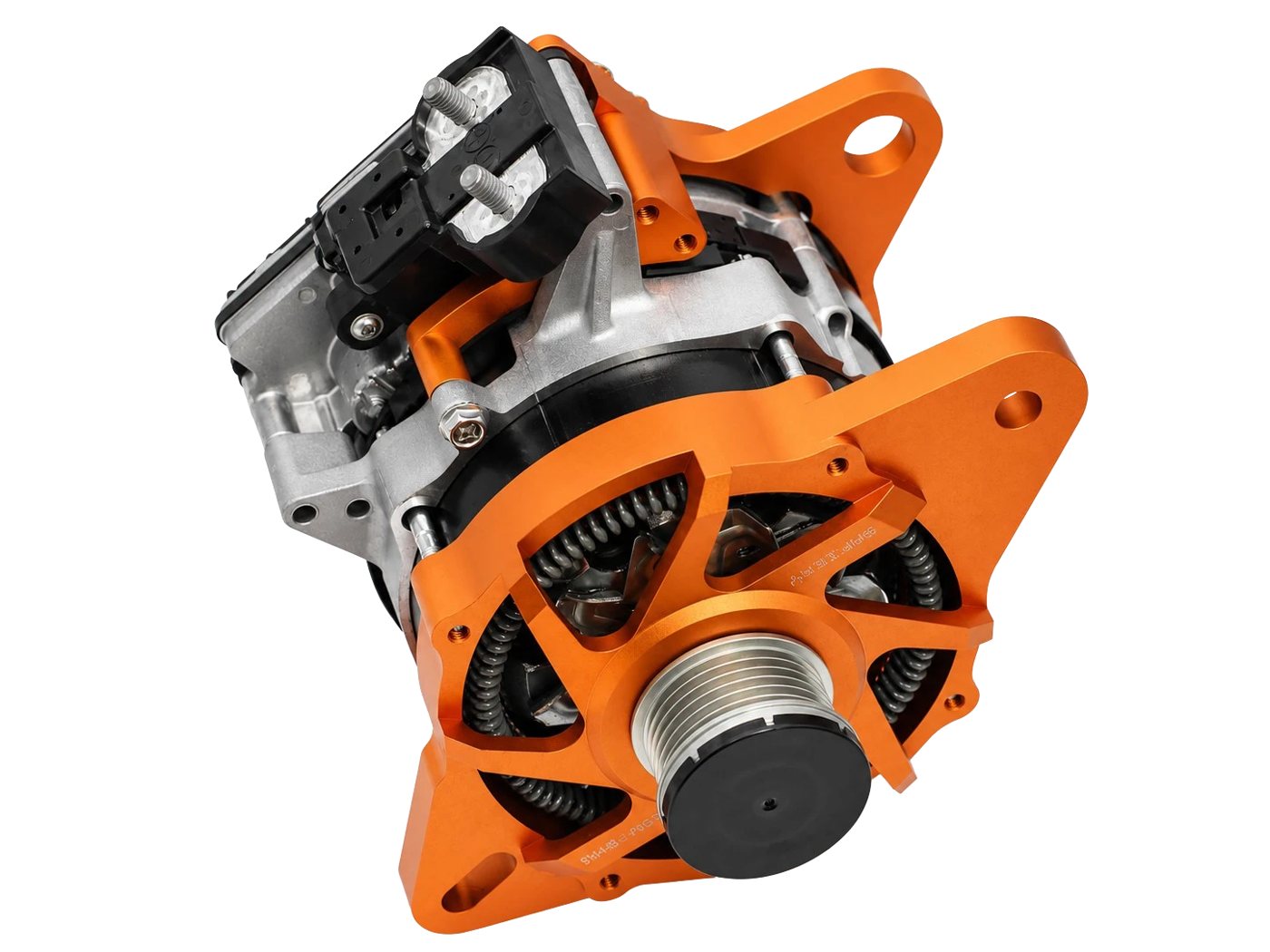
Safiery 48V Belt Motor Generator with its orange billet housing

Belt Motor Generator (BMG)

Problem being solved
48V power at idle, so the main engine and BMG take over the genset’s job.
Key feature
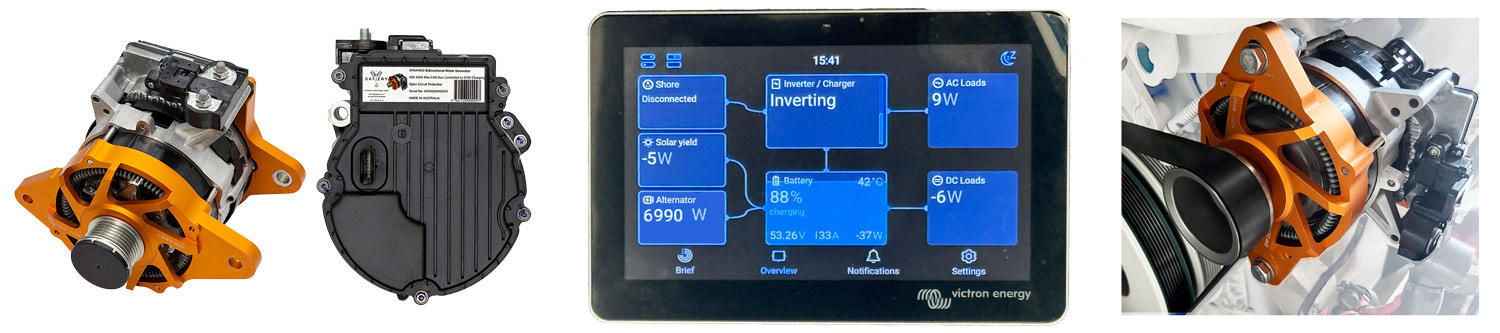
5 kW at idle, 10 kW peak, about 7.5 kW continuous. Inverter built in, 85% net efficiency.
Application note - priced example

BMG - NO Genset

Problem being solved
Carrying a genset just to make power. The BMG puts 5 kW into the 48 V house bank at engine idle, so the generator comes off the boat.
Open the application note (PDF, 1.1 MB)

Or click the image.

The Safiery 48V BMG front and back, a Victron GX Touch showing 6990 W from the alternator charging the battery, and the BMG fitted to an engine
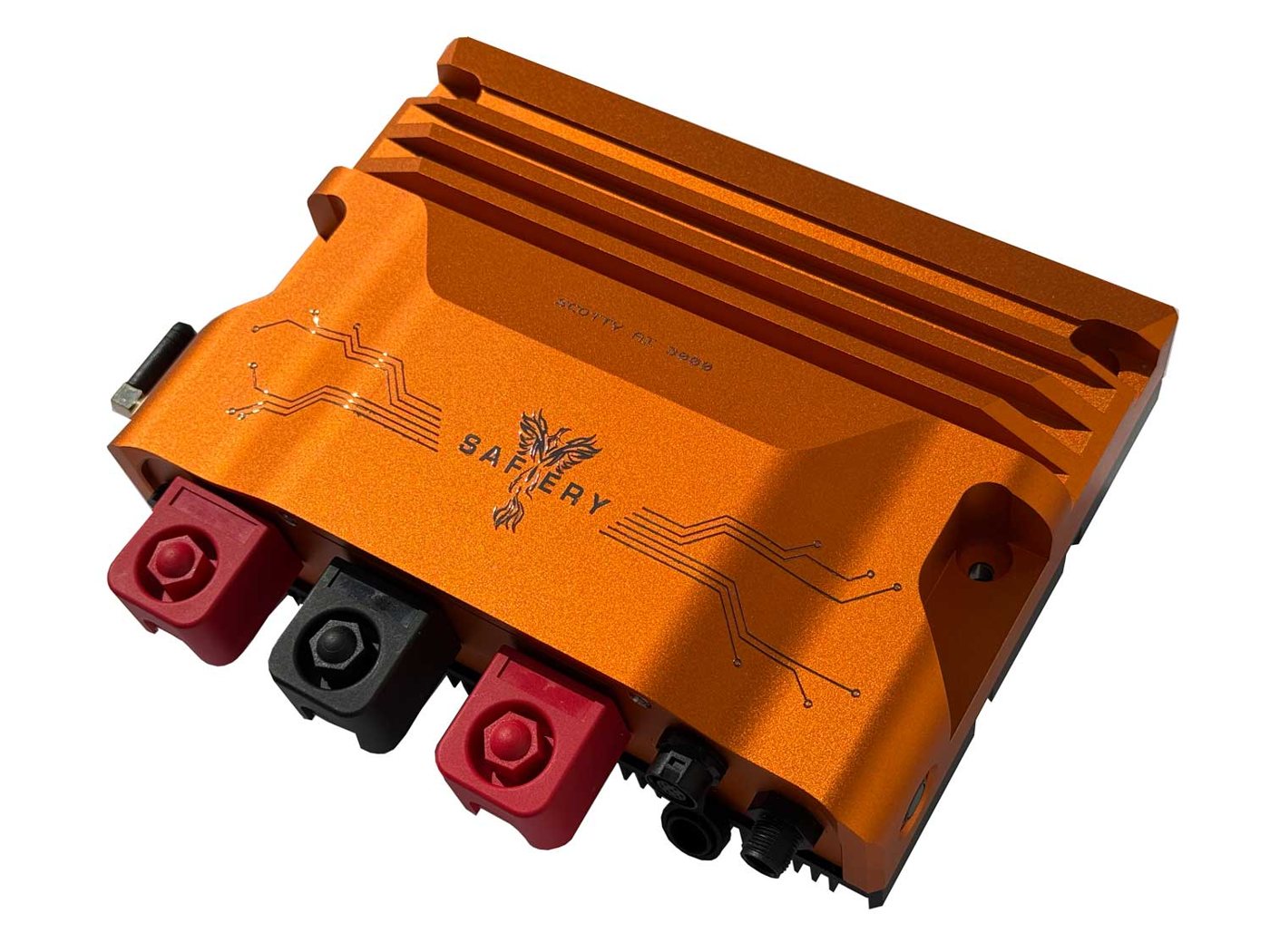
Scotty AI 3000 bidirectional DC-DC converter

Scotty AI DC-DC

Problem being solved
Running 12V and 24V equipment from a 48V bank, and charging bigger banks from the factory alternator.
Key feature
Up to 3 kW in either direction, 12V to 24/36/48V or 24V to 48V. Controls the BMG over CAN, IP66.

Lithium batteries Victron Energy compliantHiBlade brochure (PDF, 4.5 MB)

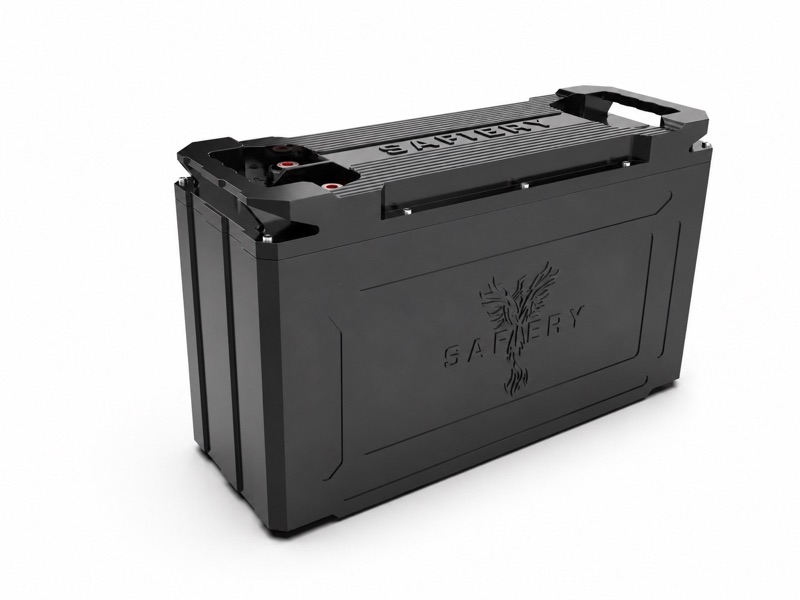
Safiery 12V Solid State lithium battery

12V / 24V Solid State

Problem being solved
Lithium safety and short cycle life in the house bank.
Key feature
Semi-solid-state cells with 10,000-cycle life. Nail-penetration and 200 kN crush tested; stacks with concealed straps.
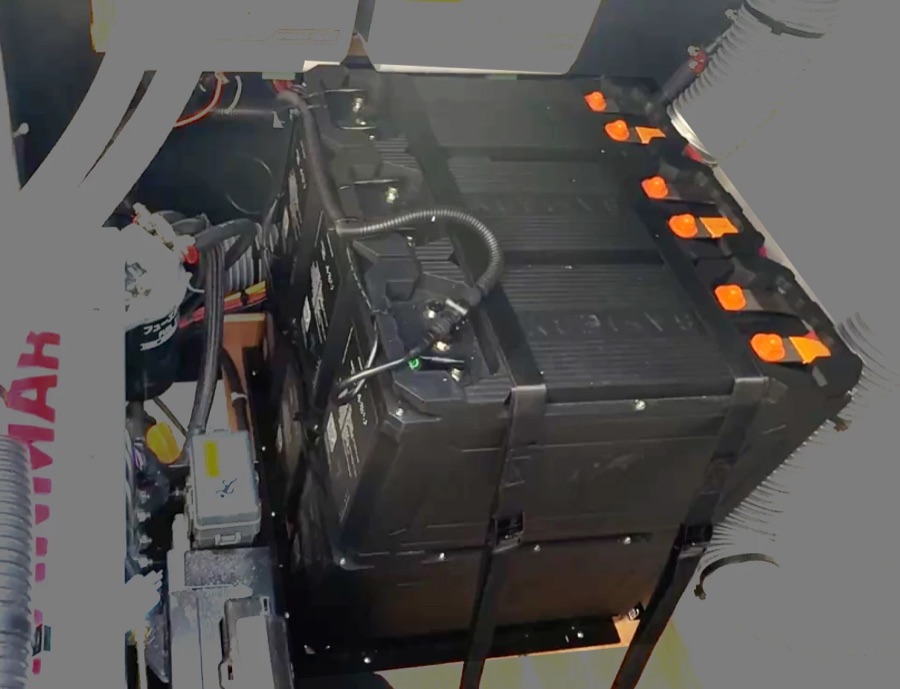
Safiery 48V 3C Solid State packs stacked and strapped beside an engine, with orange power terminals

48V 3C Solid State

Problem being solved
High power in a small, light space for electric tenders and performance yachts.
Key feature
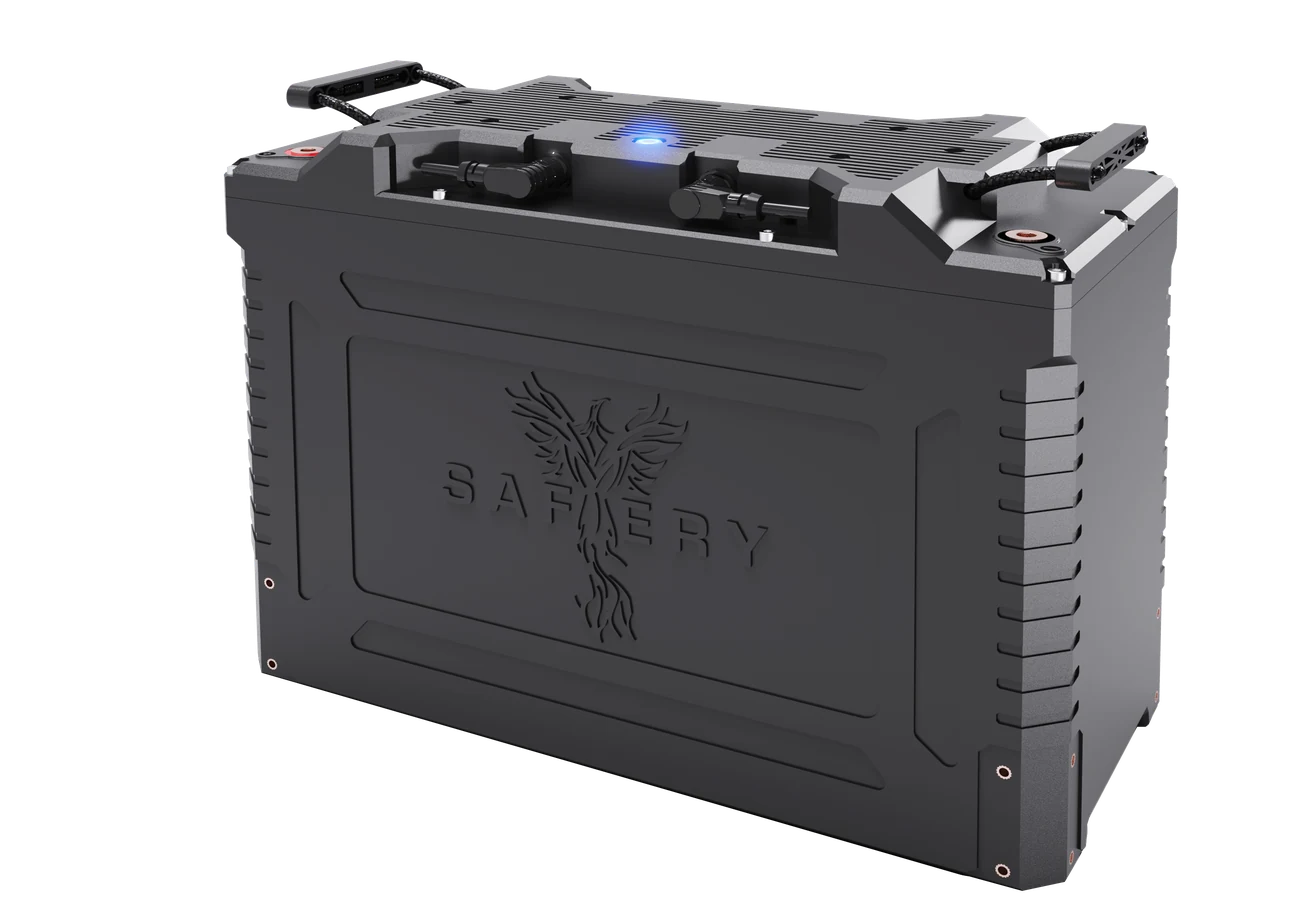
150 A continuous from a 20 kg, 2,788 Wh pack. IP67, every pack switchable from the helm over CAN. The battery used by the America’s Cup.
Safiery 48V HiBlade battery

48V HiBlade Hybrid Solid State

Problem being solved
Lithium safety that only reacts once something has already gone wrong.
Key feature
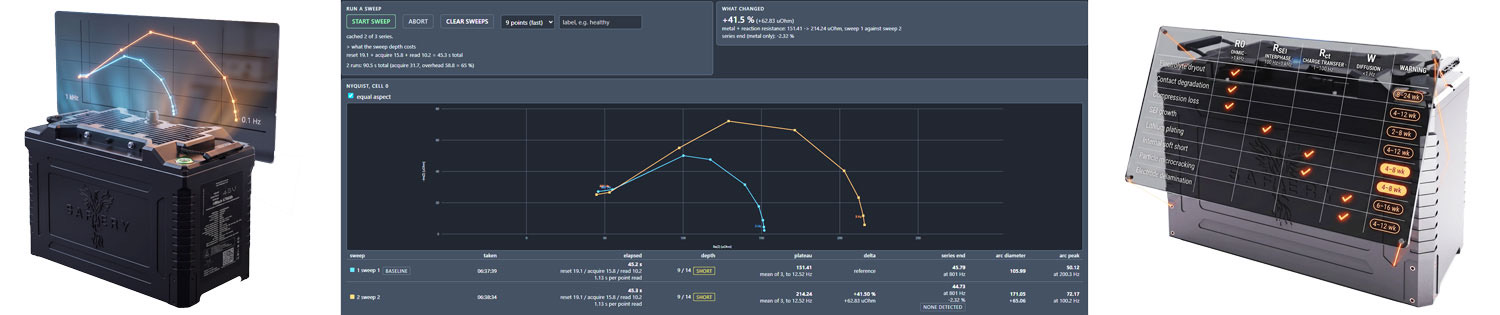
6,750 Wh in 29 kg (235 Wh/kg). The Quasar BMS tests every cell group daily and warns 4 to 8 weeks ahead across 15 fault types.
Application note - priced example

BMS is cell agnostic. Ready for All Solid State 800 Wh/kg

Problem being solved
Most BMSs are built purely for protection. For high density lithium, our BMS also creates prevention.
Open the application note (PDF, 1.9 MB)

Or click the image.

A HiBlade battery with its Nyquist plot, the EIS sweep screen comparing two sweeps of one cell, and the failure-mode matrix mapping resistances to warnings from 2 to 24 weeks ahead
Application note - priced example

Battery safety in high density all solid state lithium will require AI agents

Problem being solved
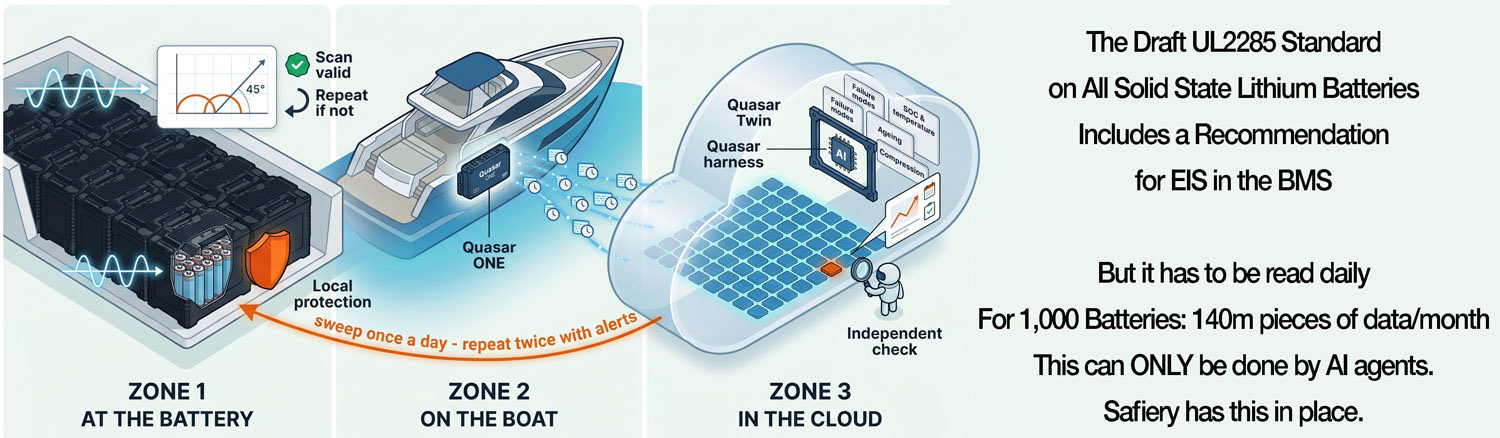
EIS measures 4 resistances across each cell group every day. The change in the Nyquist plot gives pre-warning of up to 15 failure modes. Reading this across all batteries in a fleet can’t be done by humans.
Open the application note (PDF, 1.7 MB)

Or click the image.

Three zones: EIS sweeps and local protection at the battery, Quasar ONE on the boat, and the Quasar Twin and harness in the cloud with an independent check. The draft UL2285 standard for all solid state lithium batteries recommends EIS in the BMS, read daily: for 1,000 batteries that is 140 million pieces of data a month, which only AI agents can do

Tank measurement Victron Energy compliant

STAR-Tank radar level sensor

STAR-Tank Water

Problem being solved
Wired senders need a cable run, and often a hole, for every tank.
Key feature
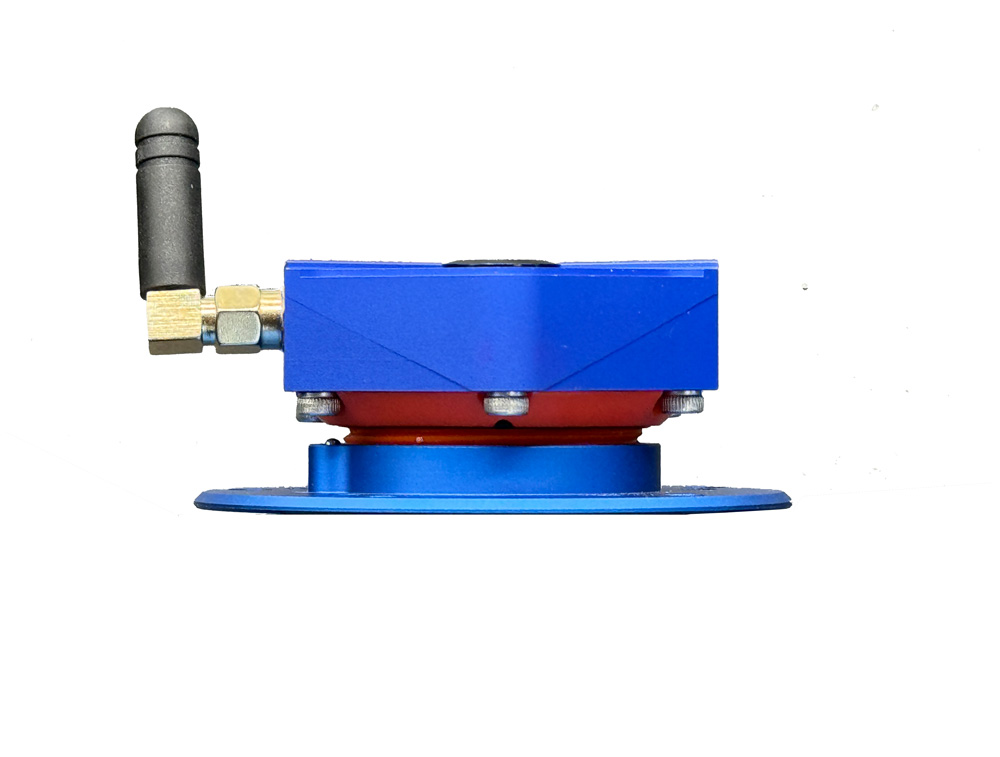
60 GHz radar reads through plastic and GRP. Battery powered for 3 to 5 years, no wiring. Fresh, grey and black water; native in Victron Venus OS.
STAR-Tank fuel sensor in side profile

STAR-Tank Fuel

Problem being solved
Diesel reflects very little radar, so ordinary radar senders struggle with fuel.
Key feature
Fuel firmware reads the tank-floor return and inverts it. Bolts to the SAE 5-hole pattern on metal tanks.
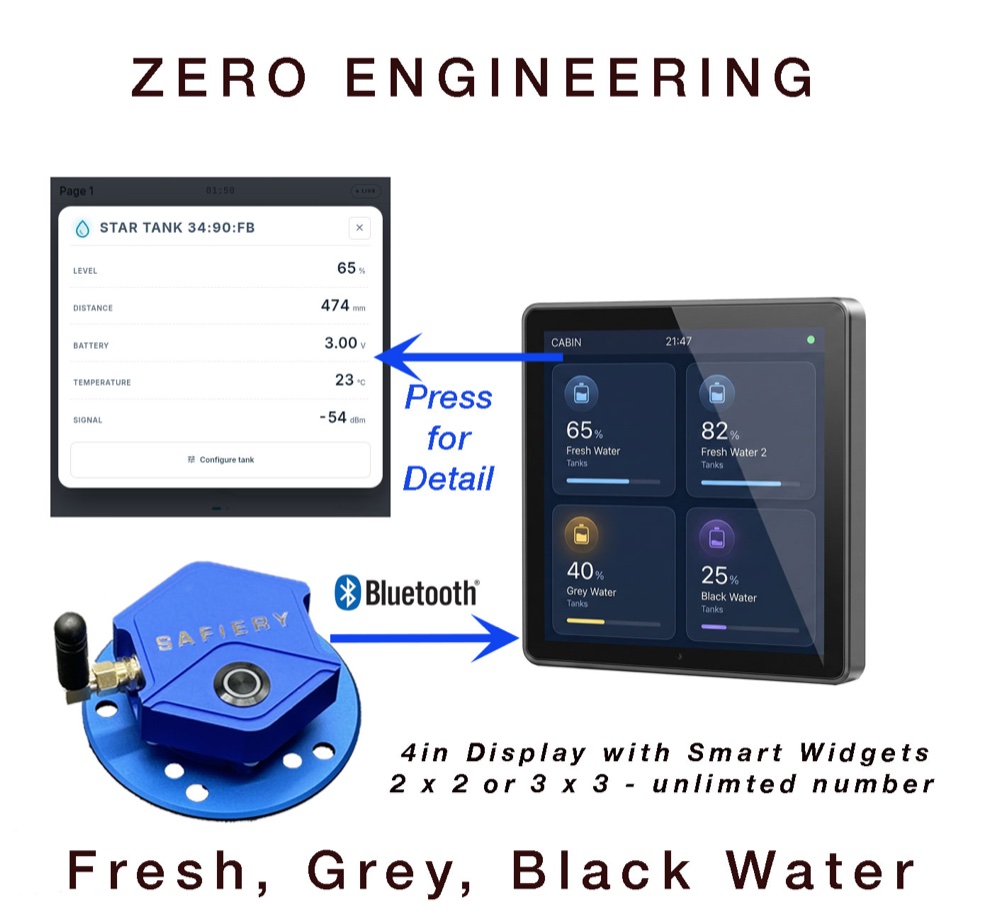
Zero engineering: a STAR-Tank sensor sends fresh, grey and black water levels over Bluetooth to a 4 inch Quasar Glass display; press a tank widget for level, distance, battery, temperature and signal

Quasar Glass for STAR-Tank

Problem being solved
Seeing tank levels at the helm without a GX device or an NMEA 2000 backbone.
Key feature
A 4 inch Quasar Glass Bluetooth panel reads every sensor directly. Levels also show in the free Quasar Glass App.

Digital switching Victron Energy compliantSTAR Range brochure (PDF, 2.8 MB)

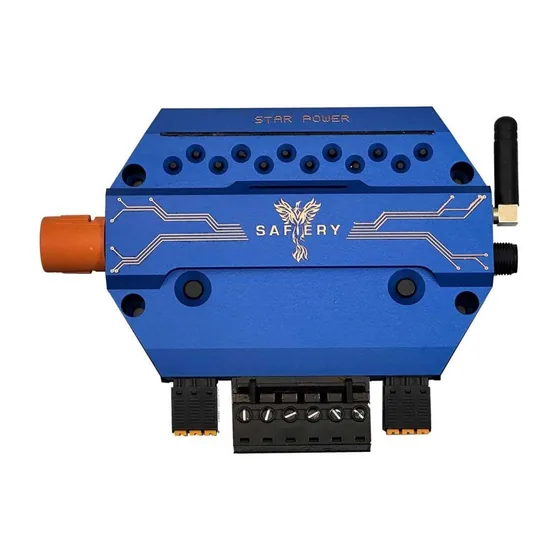
STAR-Power digital switching controller

STAR Range

Problem being solved
Fuses, hubs and programming days in conventional digital switching.
Key feature
Fuseless: hardware cut-off in 80 µs on a short. No hub, one cable to Victron, eMark certified, 12 or 24V.
Videos & details
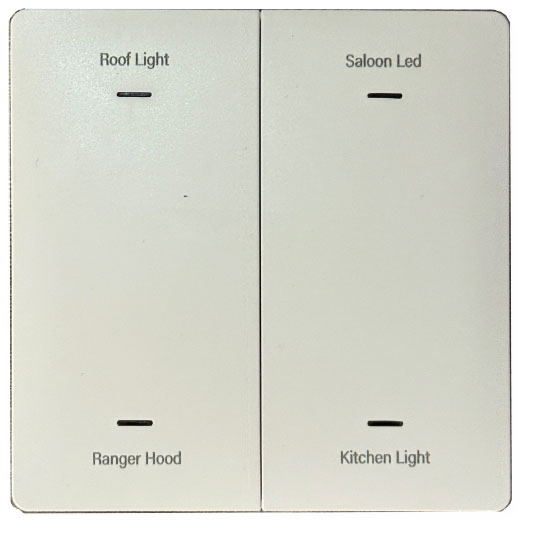
White STAR-Switch battery wall switch with four labelled buttons: Roof Light, Saloon LED, Ranger Hood and Kitchen Light

STAR-Switch Battery Bluetooth

Problem being solved
Running switch wiring to every place a switch is wanted.
Key feature
Wall and SP4 switches on a coin battery. Up to 80 wireless switches, each locked to its own ID.
Videos & details
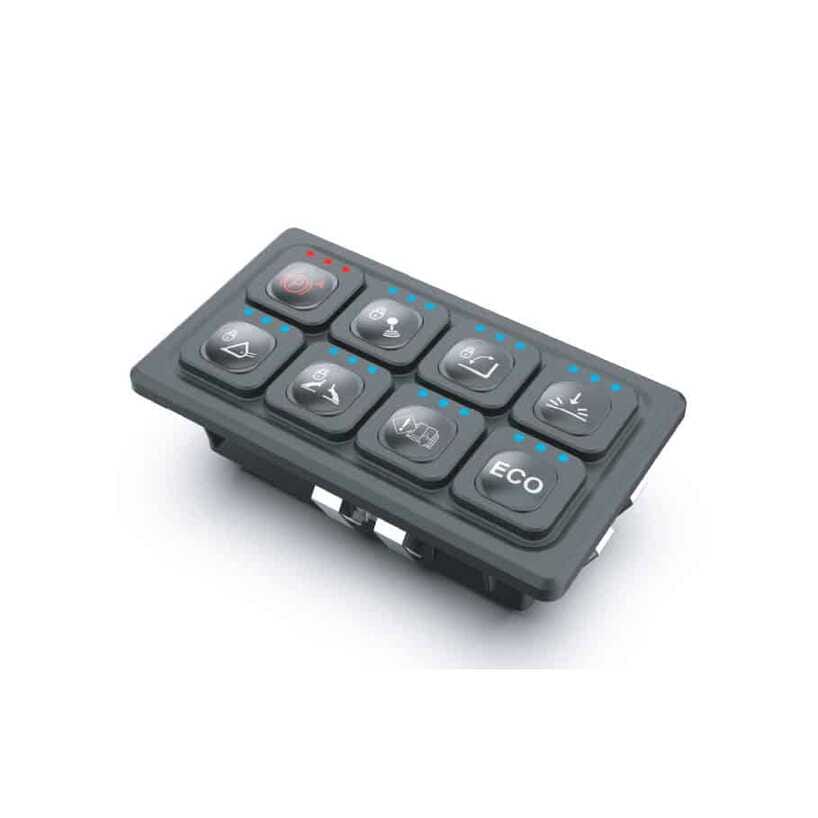
STAR-Switch IC8 eight-button CAN keypad

STAR-Switch CAN

Problem being solved
Keypads that show a button position, not the real state of the circuit.
Key feature
8 or 12 backlit buttons with interchangeable icons. LEDs follow the channel however it was switched.
Videos & details
STAR-Switch Custom six-input module

STAR Custom

Problem being solved
Keeping the builder’s own switches while going digital.
Key feature
Six wired inputs, each momentary, toggle or latched, with AND/NAND/OR/NOR logic and interlocks.
Videos & details
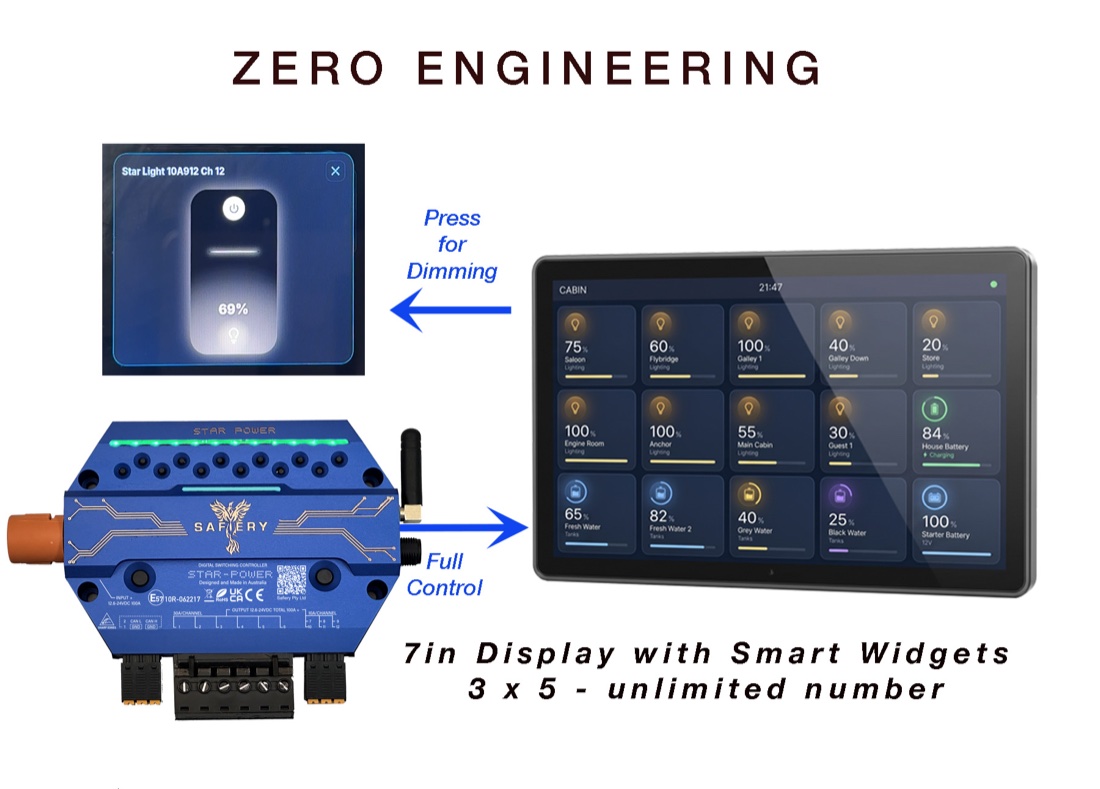
Zero engineering: a STAR-Power controller gives full control from a 7 inch Quasar Glass display with lighting, battery and tank widgets; press a light for dimming

Quasar Glass

Problem being solved
Putting digital switching on a screen, with or without Victron.
Key feature
4, 10 and 13.3 inch touch screens plus the free app. With Victron, the same screen shows batteries, solar and chargers.
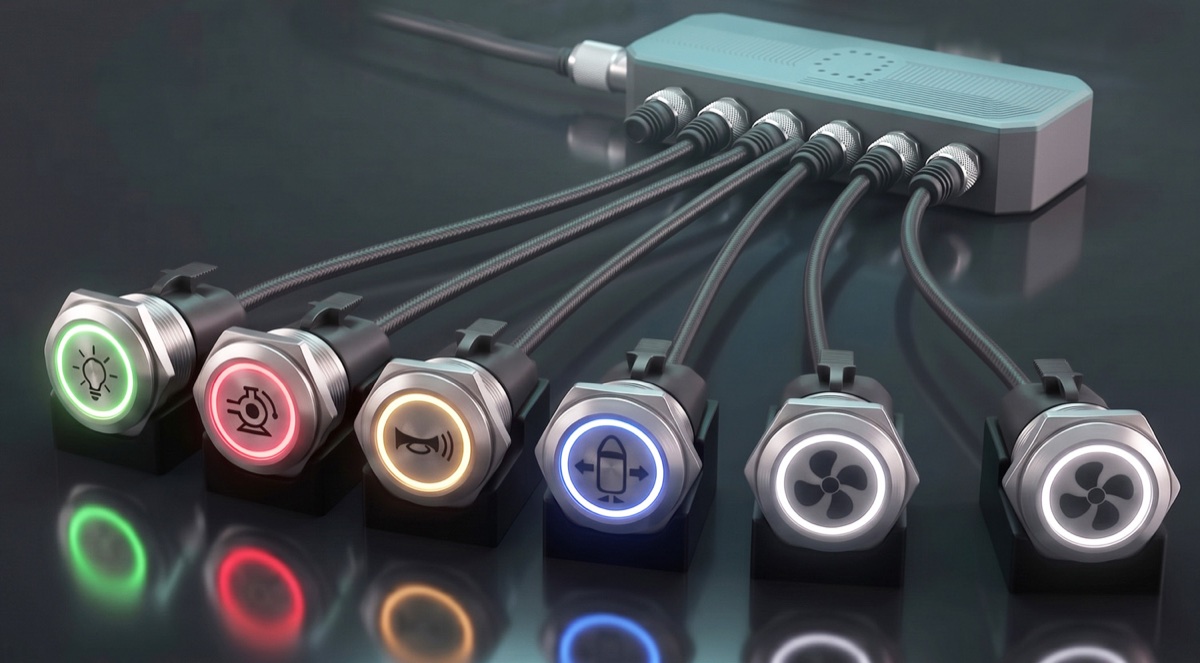
Six stainless push buttons with green, red, amber, blue and white RGB rings and laser-marked icons, each on a braided cable to a LIN switch node

LIN bus stainless RGB switches

Problem being solved
Excessive copper, cost and weight, and no smarts in the switches.
Key feature
Up to 48 stainless IP67 switches with RGB. Low power, auto dimming and a pre-check feature. Saves installed cost.
Videos & details
Application note - priced example

24 buttons on one bus

Problem being solved
Stainless switches anywhere on the boat, set up from a spreadsheet in ten minutes, with CZONE already fitted or the STAR range.
Open the application note (PDF, 0.6 MB)

Or click the image.

An MFD and NMEA 2000 backbone connected to STAR-Light and STAR-Power controllers, then four LIN switch nodes in a chain, each with six stainless RGB push buttons

Glass displays with Bluetooth connectivity: zero engineering Victron Energy compliant

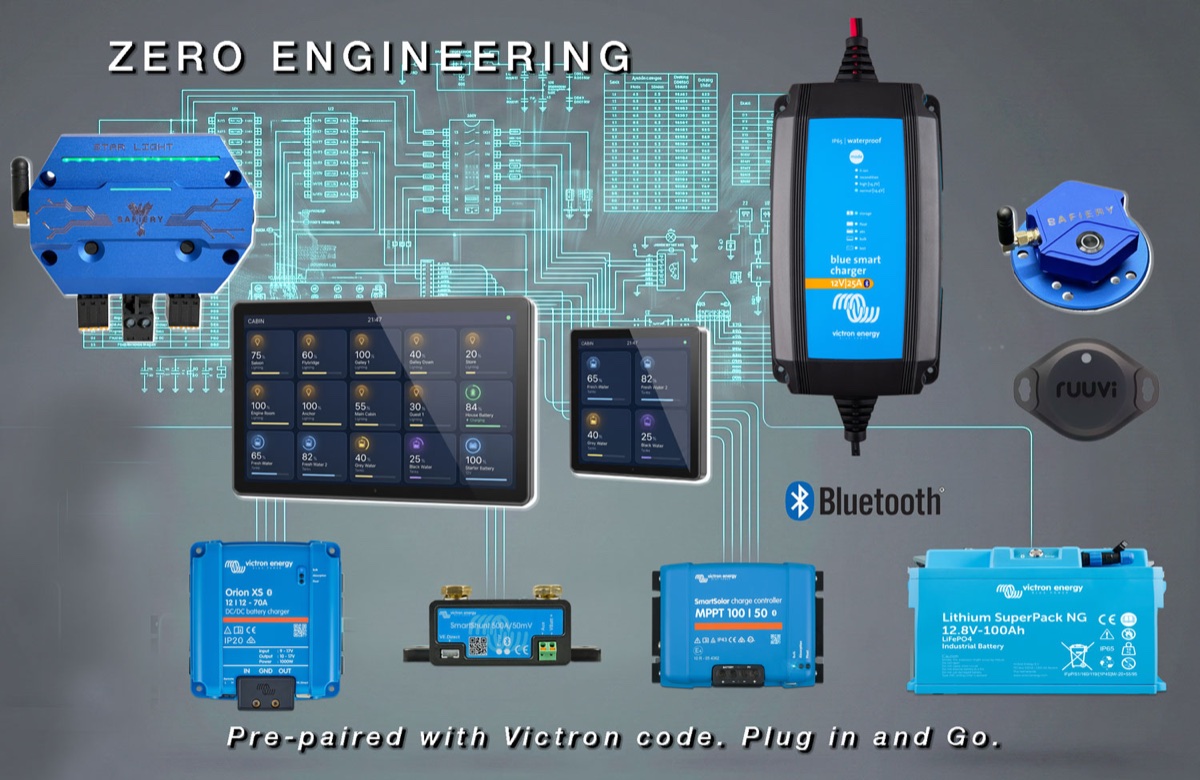
Zero engineering: Quasar Glass displays read a STAR-Light controller, STAR-Tank, a Ruuvi sensor and Victron Bluetooth devices (Blue Smart charger, Orion XS, SmartShunt, SmartSolar MPPT and Lithium SuperPack NG). Pre-paired with Victron code. Plug in and go.

Quasar Glass Bluetooth

Problem being solved
There is no Venus GX, just a collection of Victron Bluetooth devices and no screen.
Key feature
Zero data wires: all Victron BLE devices, tanks, sensors and STAR switching read over the air. 20+ widgets pre-designed for each Victron device.
Application note - priced example

Zero engineering for boat builders with 100% Bluetooth Display

Problem being solved
Reduce electrical installed cost by 50%.
Open the application note (PDF, 5 MB)

Or click the image.

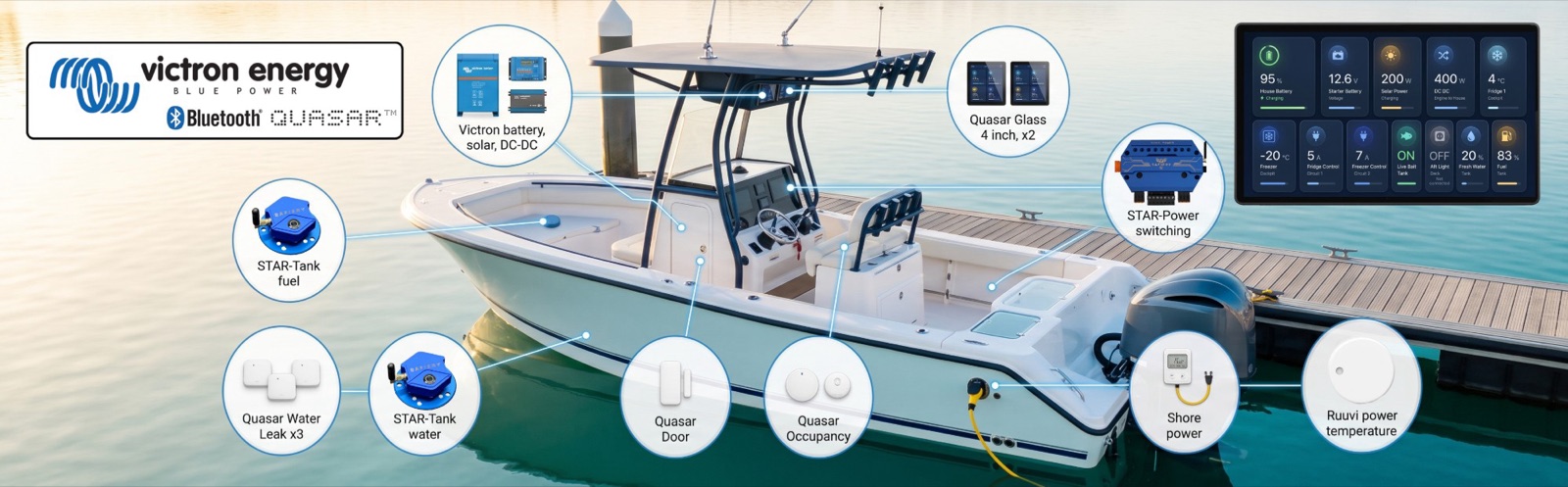
Centre console boat with Victron Energy and Quasar Glass over Bluetooth: Victron battery, solar and DC-DC, two 4 inch Quasar Glass panels, STAR-Power switching, STAR-Tank fuel and water, Quasar water leak, door and occupancy sensors, shore power and Ruuvi temperature
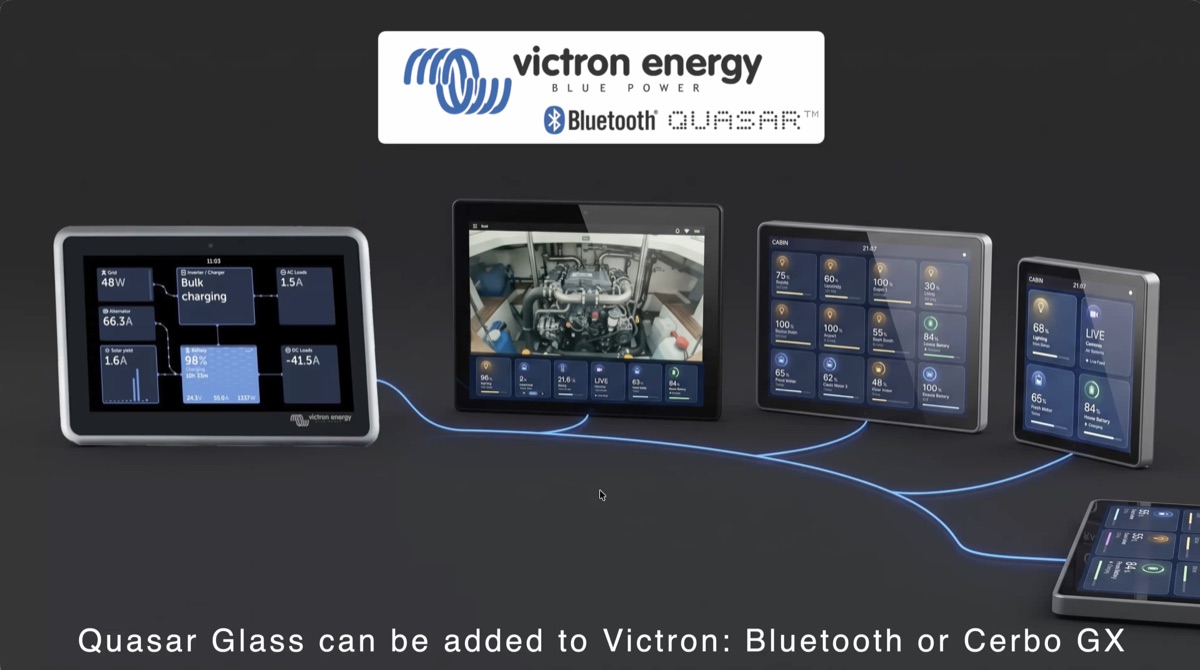
Quasar Glass added to Victron by Bluetooth or Cerbo GX: a Victron touch display joined by 4, 7 and 10 inch Quasar Glass screens showing a live engine room camera, cabin lighting, tanks and batteries

Quasar Glass Power and Vision

Problem being solved
Lack of camera integration and Bluetooth sensors, and only one Victron screen.
Key feature
Any number of 4in, 7in and 10in screens with integrated video streaming and additional Bluetooth sensors.
Application note - priced example

Power and Vision integrated in multiple screens

Problem being solved
Simplify the installation and reduce installed cost by 50%.
Open the application note (PDF, 10 MB)

Or click the image.

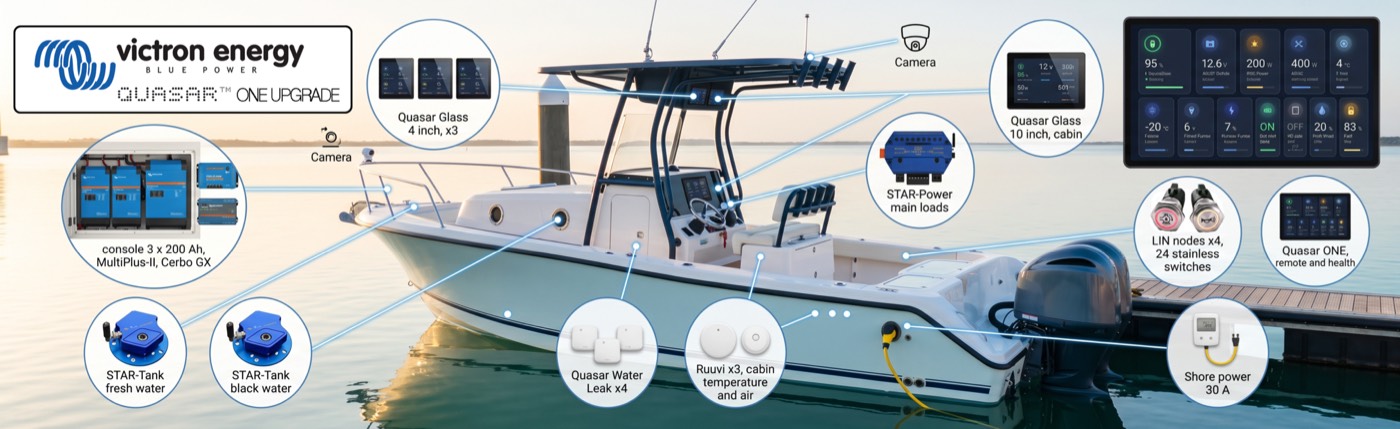
36 ft centre console with Victron Energy and a Quasar ONE upgrade: three 4 inch and one 10 inch Quasar Glass screens, cameras, a 3 x 200 Ah MultiPlus-II and Cerbo GX console, STAR-Power main loads, four LIN nodes with 24 stainless switches, STAR-Tank fresh and black water, water leak and Ruuvi sensors, and 30 A shore power

Vessel health and predictive maintenance through Digital Twin and AI agents Victron Energy compliant

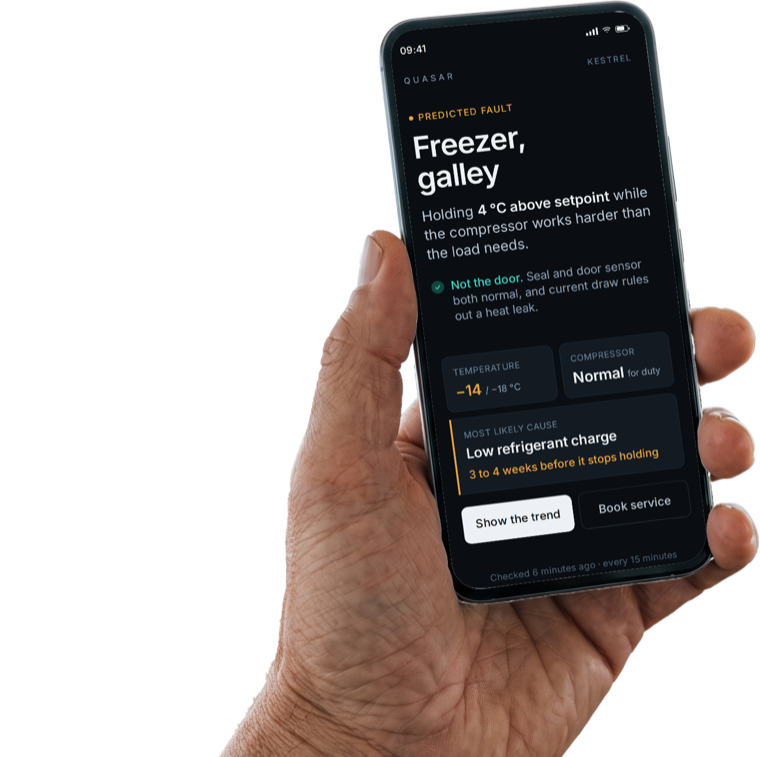
Quasar Care on a phone: a predicted fault for the galley freezer, holding 4 degrees above setpoint, with the most likely cause, low refrigerant charge, 3 to 4 weeks before it stops holding, and buttons to show the trend or book service

Quasar Care

Problem being solved
A boat has 7 systems and 7 apps, with no vessel wide uniform reporting and no vessel log.
Key feature
AI agents watch the digital twin of the boat in the cloud every day: predictive maintenance with weeks of warning, a pre-check the day before every trip, and one vessel log that keeps every issue from first report to final fix. Works across all brands.
Videos & details
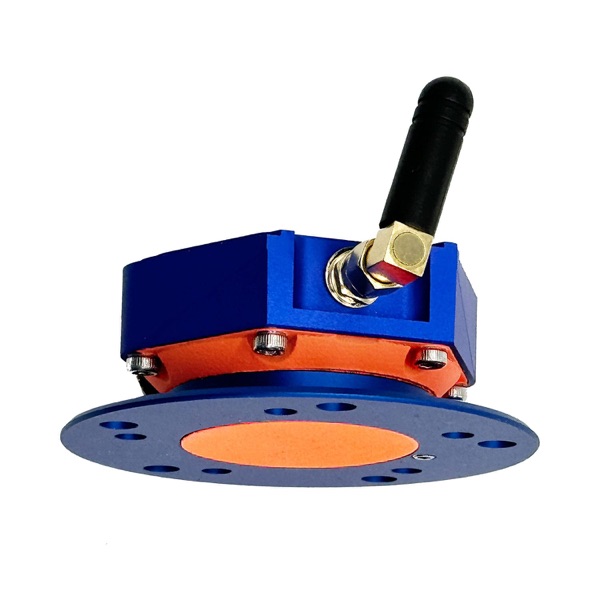
Quasar ONE in its billet aluminium case

Quasar ONE

Problem being solved
Faults found only after the alarm, or after the owner calls.
Key feature
Checks every device every 15 minutes against the boat’s own history. 60 AI health checks, voice in 12 languages, works offline with its own eSIM.
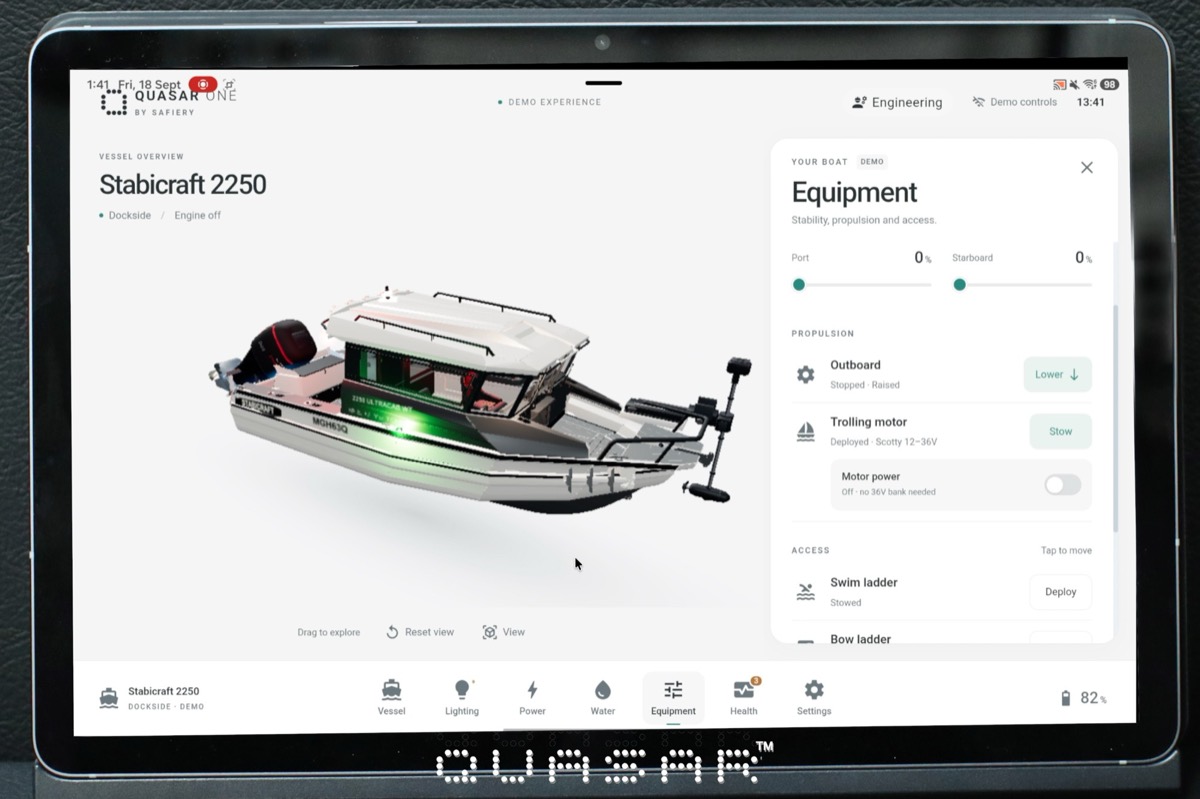
Quasar ONE touch display showing an animated 3D model of a Stabicraft 2250 with its Equipment panel: trim tabs, outboard, trolling motor and swim ladder controls

Animate and Customise your Quasar Touch Display

Problem being solved
Alarms are typically a list of notifications. On the Quasar 3D display, the display turns to X-Ray mode and alarms pop up with detailed information.
Key feature
Log in to Safiery’s AI portal and enter your Quasar ID. Then select the animation feature and upload as many images as you want. Describe how you want the boat to appear and any unique features. You don’t have to say much.
Videos & details

Apple Home view display for Victron and STAR

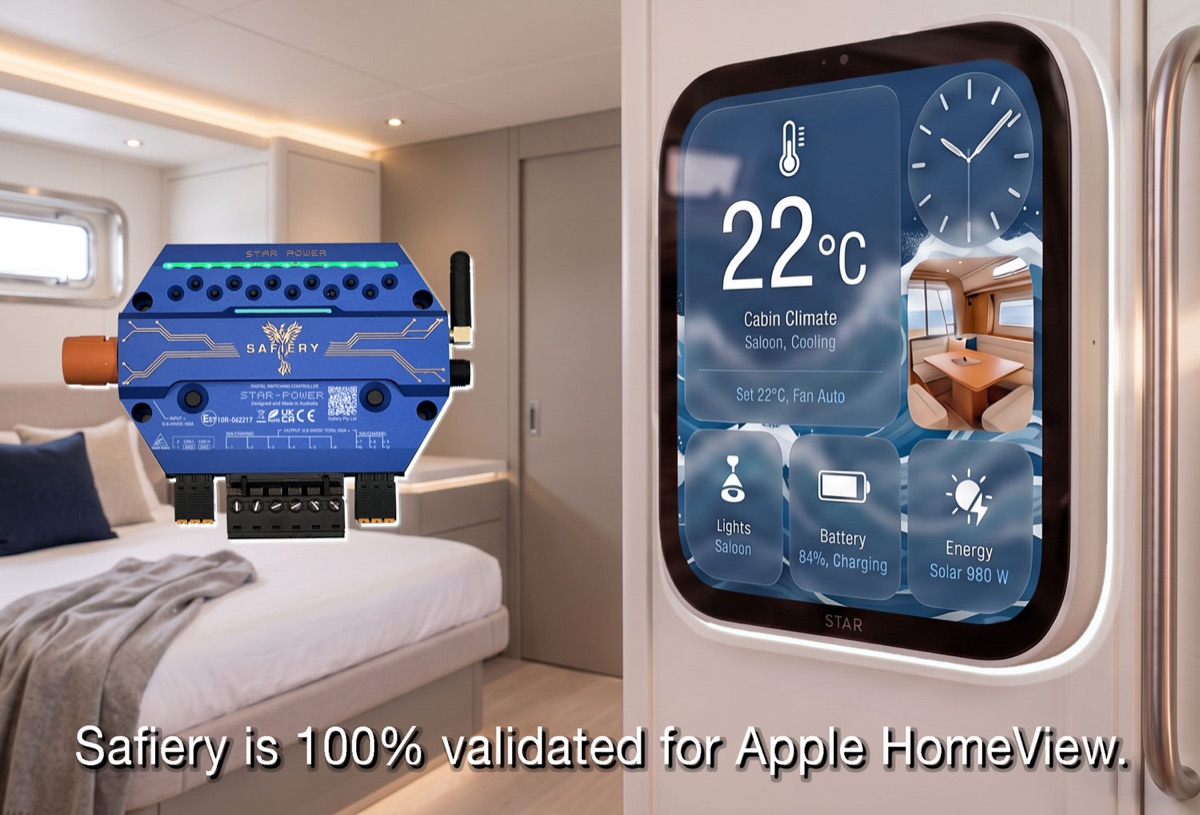
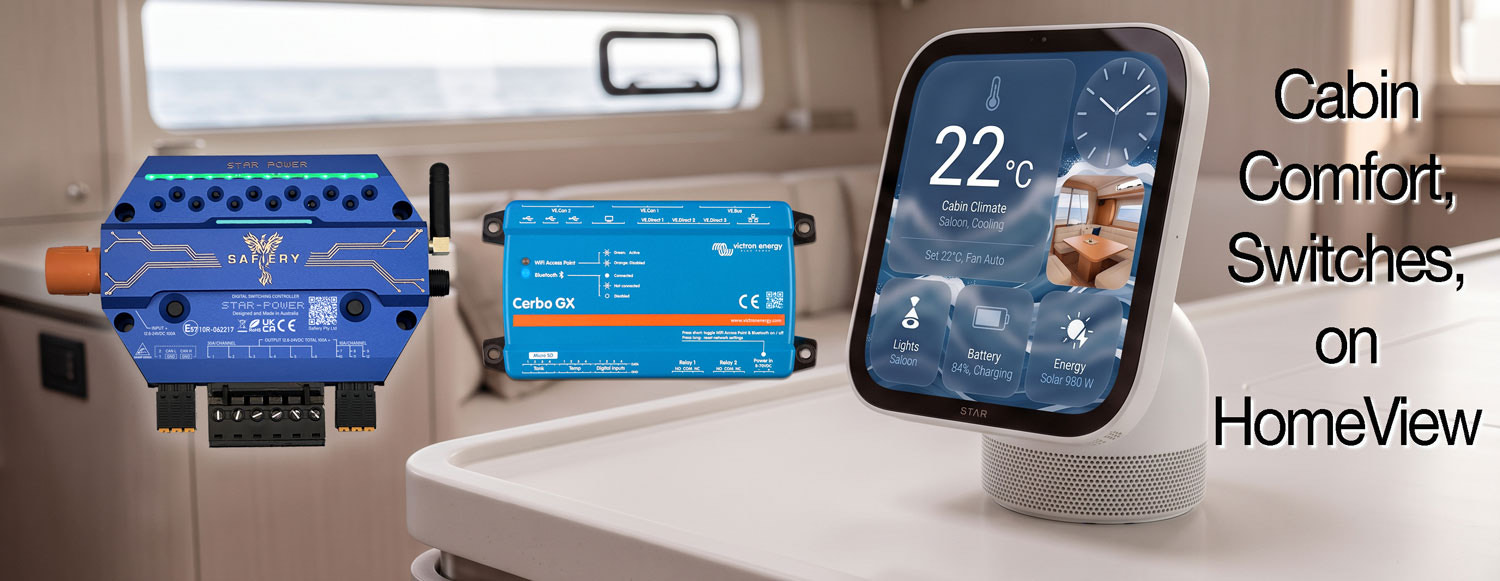
STAR-Power controller in a yacht cabin beside a STAR wall display showing cabin climate 22 degrees, lights, battery 84% charging and solar 980 W. Safiery is 100% validated for Apple HomeView.

Apple HomeView - Affordable for every cabin

Problem being solved
Boat systems that the owner’s phone and home ecosystem cannot see.
Key feature
New Apple HomeView has all the integrated multimedia and mirrors the phone. Safiery STAR controllers are Matter certified for Apple HomeView. Scenes run locally, with no internet.
Videos & details
Application note - priced example

STAR and Quasar with Apple Home View

Problem being solved
Cabin comfort and switching on the owner’s Apple Home View: lights, fans, battery, energy and cabin air conditioning, with no extra app.
Open the application note (PDF, 2.3 MB)

Or click the image.

Cabin comfort, switches, on HomeView: a STAR-Power controller and Victron Cerbo GX beside a STAR HomeView display showing cabin climate 22 degrees, lights, battery and solar

Integration with multiple connected systems and one unified display system

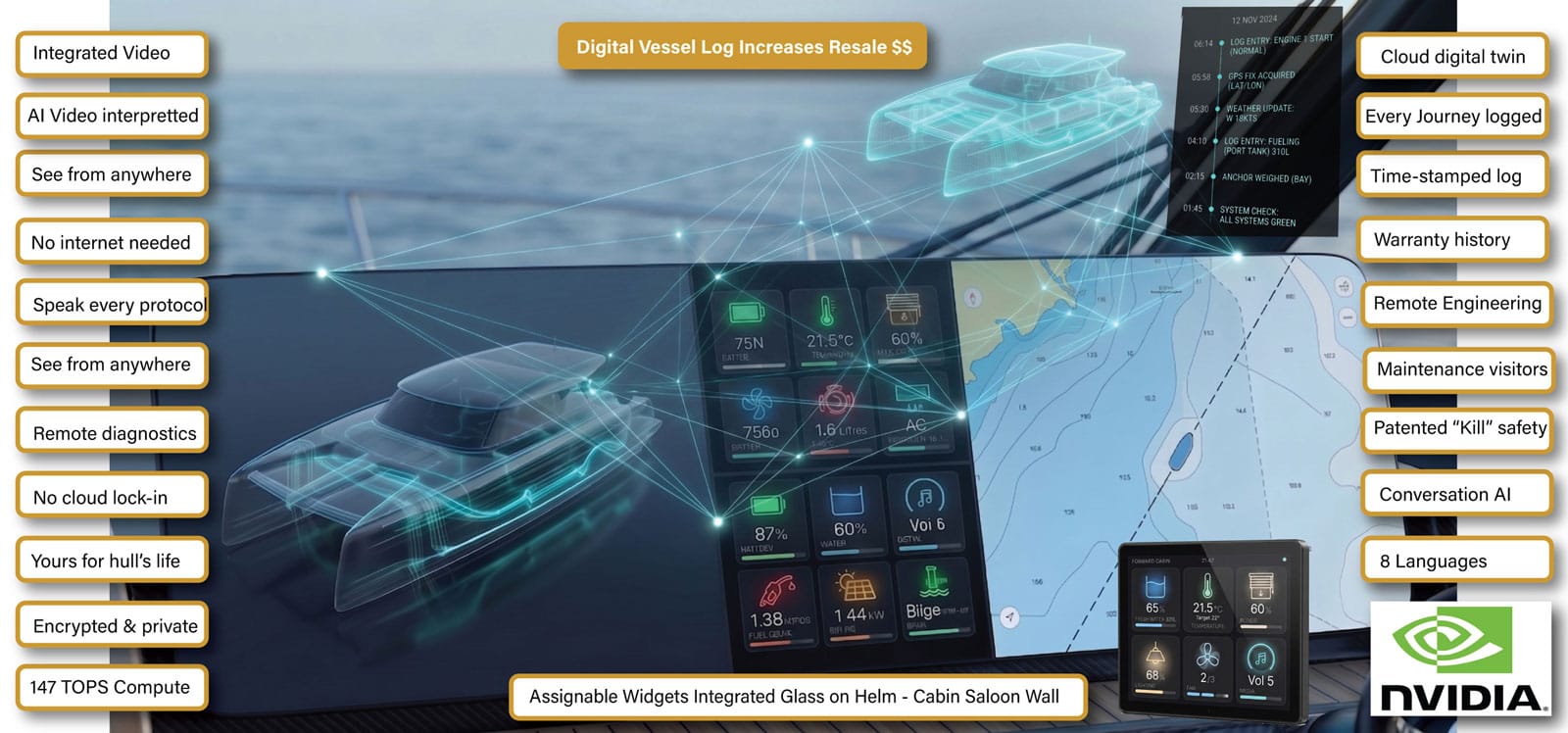
Helm with Quasar Master unified displays

Quasar Master

Problem being solved
Seven systems on board with seven apps.
Key feature
Home Assistant on a CM5 puck with 50+ integrations and 3D touch displays. Optional NVIDIA Jetson for on-board voice and vision AI with no internet.
Videos & details
Quasar Digital Twin and unified displays across the vessel

Quasar Marine

Problem being solved
Lock-in and the engineering cost of integrating a whole boat.
Key feature
Every system on one open framework, the same picture on every display. AI-assisted programming took 1 hour instead of 8 on the McConaghy MC86GT.
Videos & details

Sailing lifestyle

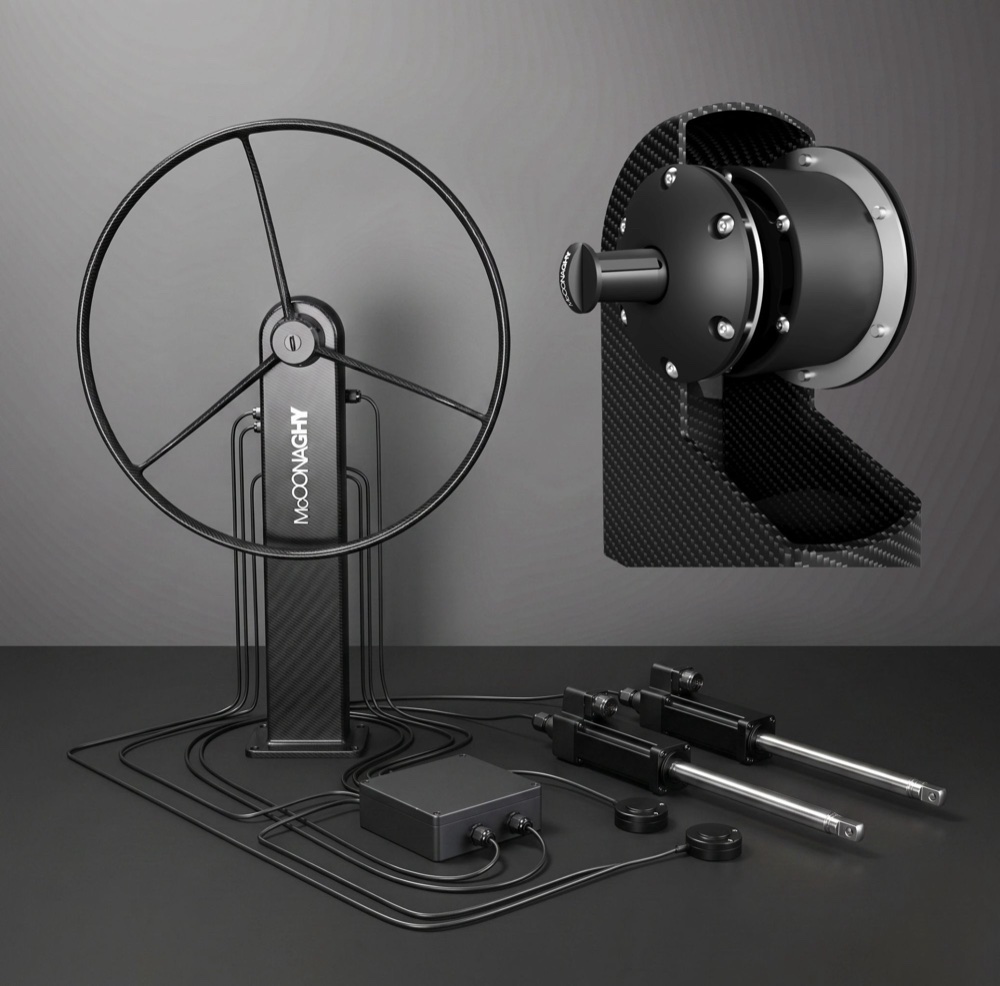
McConaghy carbon helm wheel and pedestal with its steer-by-wire controller, electric rudder actuators and sensors, plus a close-up of the helm unit

Steer-by-wire

Problem being solved
Hydraulic steering: 8 to 12 kWh a day, hoses through both hulls, poorly synced helm stations.
Key feature
Up to four helm stations servo-synchronised, real rudder feel at the wheel, under 2 kWh a day.
Videos & details
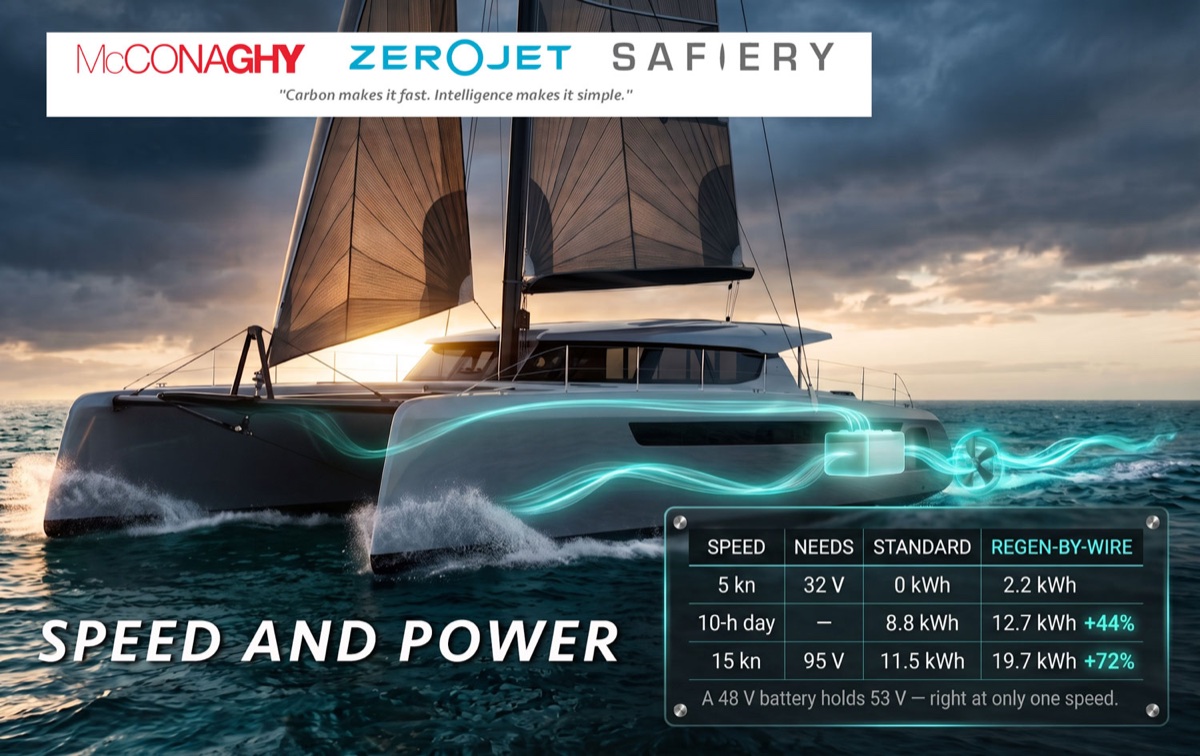
McConaghy, ZeroJet and Safiery electric catamaran under sail, "Speed and power". Regen-by-wire recovers 2.2 kWh at 5 knots where a standard system recovers none, 12.7 kWh over a 10-hour day (+44%) and 19.7 kWh at 15 knots (+72%).

Regen-by-wire

Problem being solved
Regeneration voltage changes with boat speed, from about 32 V at 5 knots to 95 V at 15, but a 48 V battery holds 53 V. Standard regen recovers nothing at 5 knots and only 11.5 kWh at 15.
Key feature
Software matches regeneration to the battery at every speed: 2.2 kWh at 5 knots where standard gets none, 12.7 kWh over a 10-hour day (+44%) and 19.7 kWh at 15 knots (+72%).
Videos & details
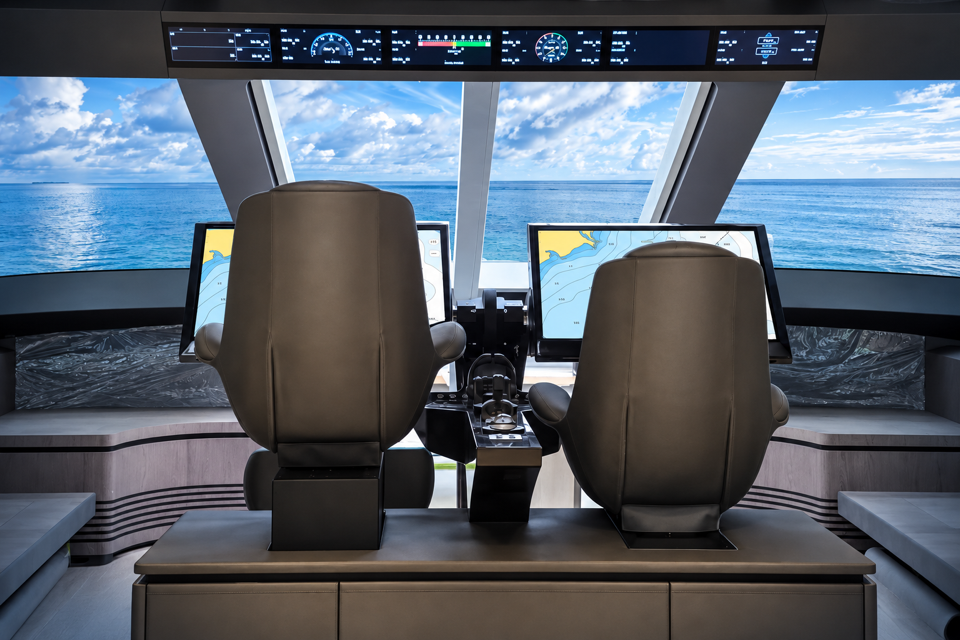
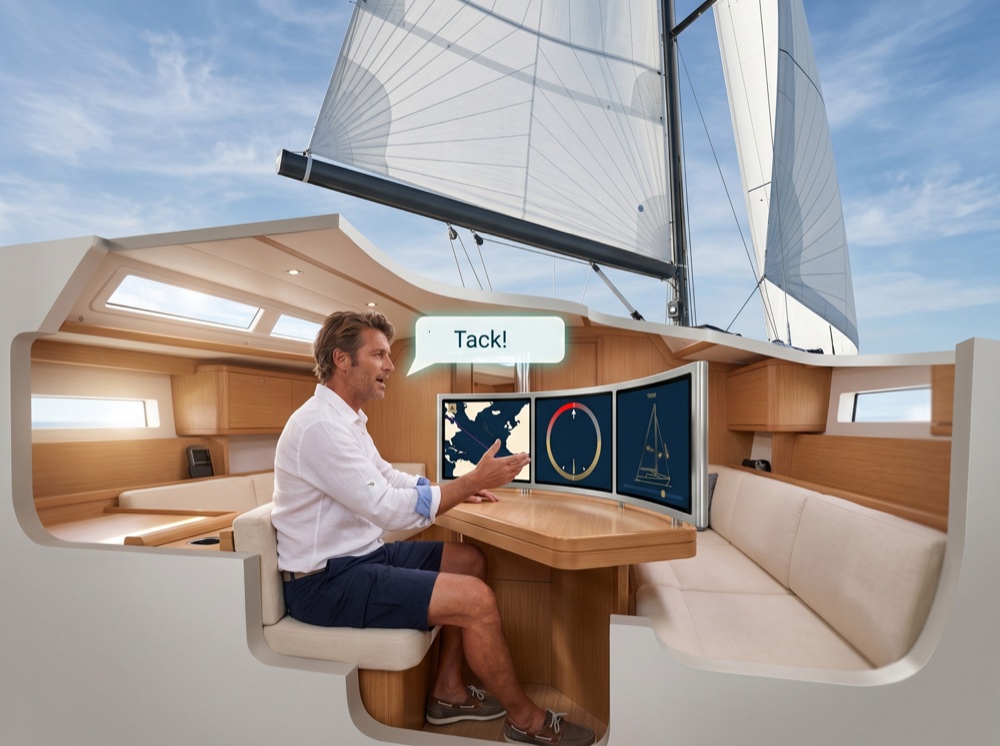
A skipper seated at a curved three-screen chart, heading and trim display below deck says "Tack!" while the yacht sails itself

Auto-sailing

Problem being solved
Sailing short-handed or single-handed.
Key feature
Sail to a waypoint in software, built on the certified wheel-to-rudder foundation. Developed with McConaghy.
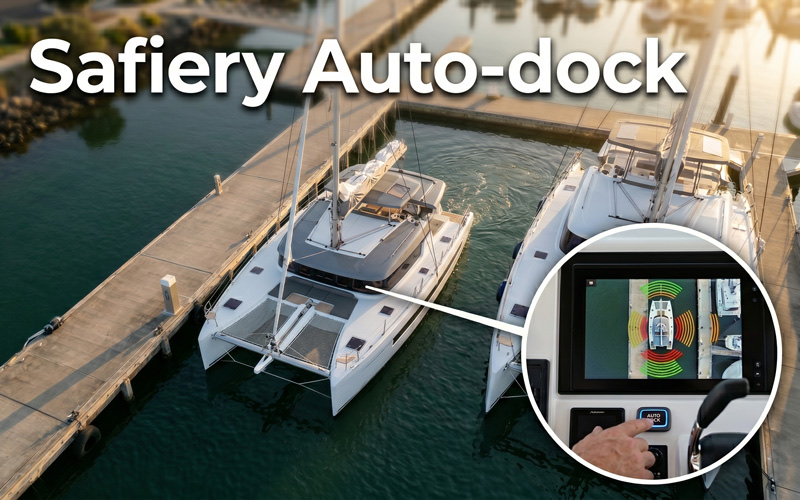
Safiery Auto-dock: a catamaran berthing itself between pontoons, with an inset of the helm display showing radar proximity zones around the hull and a finger pressing the AUTO DOCK button

Auto-docking

Problem being solved
The most stressful ninety seconds of an owner’s day, often in the dark or rain.
Key feature
360° cameras fused with 77 GHz radar place the dock to about 100 mm. Hold to dock; release and it is instantly manual.
Videos & details

About Safiery

What’s unique about Safiery

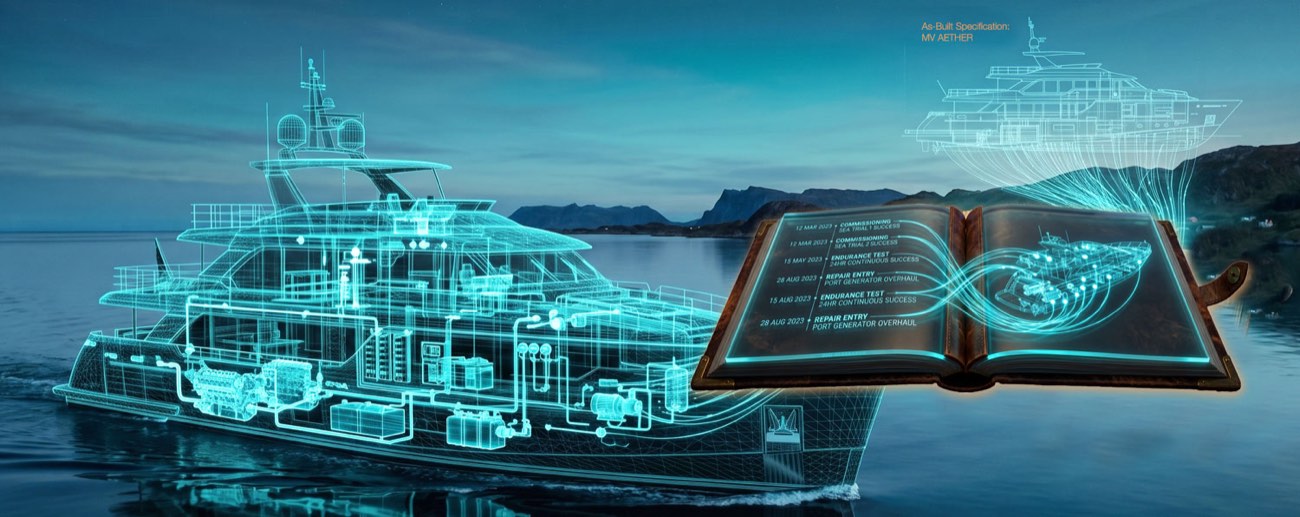
We own the whole stack, from the silicon design to the cloud. And in the cloud we are well advanced with AI agents to simplify engineering and manage asset management.

Read about Safiery (PDF, 2.8 MB)

Or click the image.

A motor yacht shown as a glowing digital twin of its systems, beside an open vessel log recording commissioning, sea trials, an endurance test and a generator overhaul, and its as-built specification
The Quasar thesis

Ten Provocative Questions for Boat Builders in 2026

Each question follows the same shape: what already changed in automotive, robotics or building automation — and how Quasar brings the same move to the water.

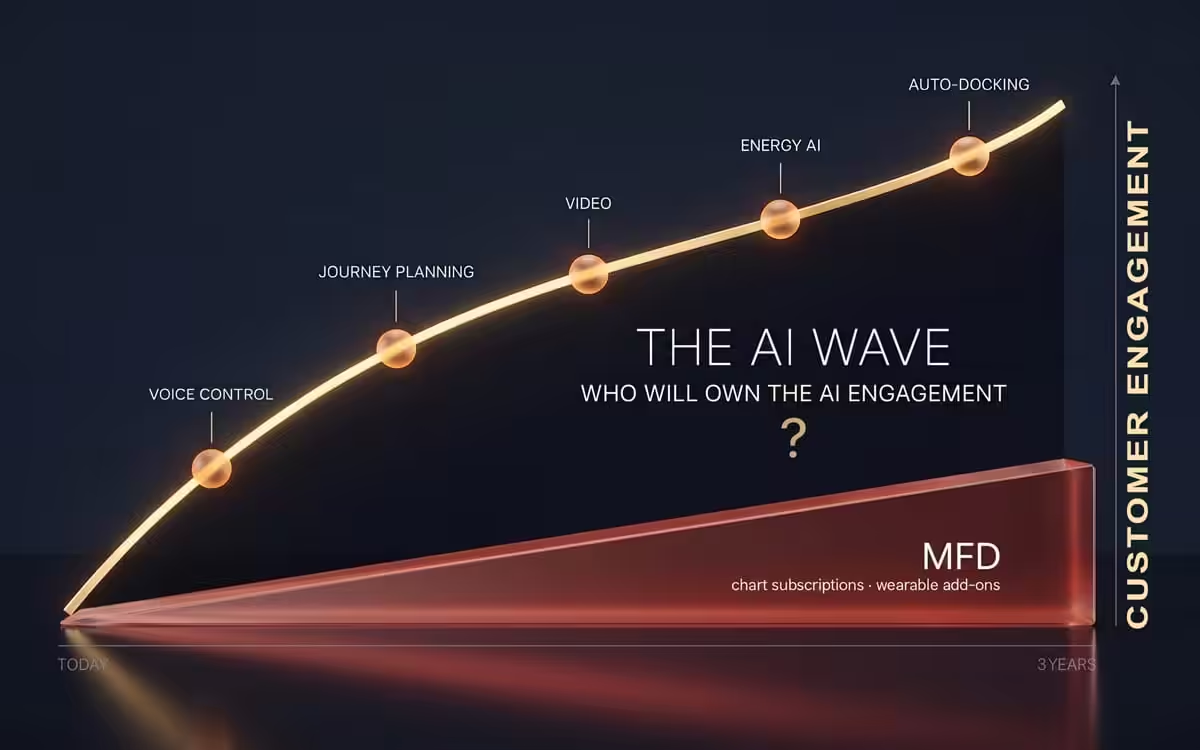
Customer engagement increases dramatically with AI
01

Automotive will keep its customer through AI. Will marine?

The AI wave decides — in the next 1–3 years.

SituationBMW ships Apple CarPlay and Android Auto yet still owns the customer — the screen, the operating system, the vehicle data and the services are BMW’s; the phone giants ride on BMW’s glass, on BMW’s terms. Automotive went further and agreed an open standard for the vehicle database itself — COVESA’s Vehicle Signal Specification, a self-describing data tree that lets AI read a vehicle with minimal training.

ComplicationMarine went the other way. The boat builder hands the glass to the MFD vendor — and with it the account, the app, the subscription and, quietly, the customer. The AI wave now arriving will lock that ownership in, one way or the other, within the next 1–3 years.

QuestionWill the boat builder keep the customer through the AI wave — or hand it to an MFD vendor for the life of the boat?

Answer

Quasar gives the builder what BMW kept: the glass, the data and the relationship. The intelligence lives in the vessel, not a vendor’s cloud — the boat is the database, built on an open semantic model where every data point carries its own plain-language description (fleet.vessel.electrical_loads.AC.watermaker.power). Because each point describes itself, the AI needs almost no training: it answers by voice, interprets the cameras, optimises consumption and flags a failing circuit before it becomes a call-out. Many devices can be configured and re-engineered remotely, cutting installation and warranty costs long after handover; the tamper-proof log travels with the hull and lifts resale. The builder who owns the vessel’s data owns the customer for the life of the boat.

Customer engagement increases dramatically with AI

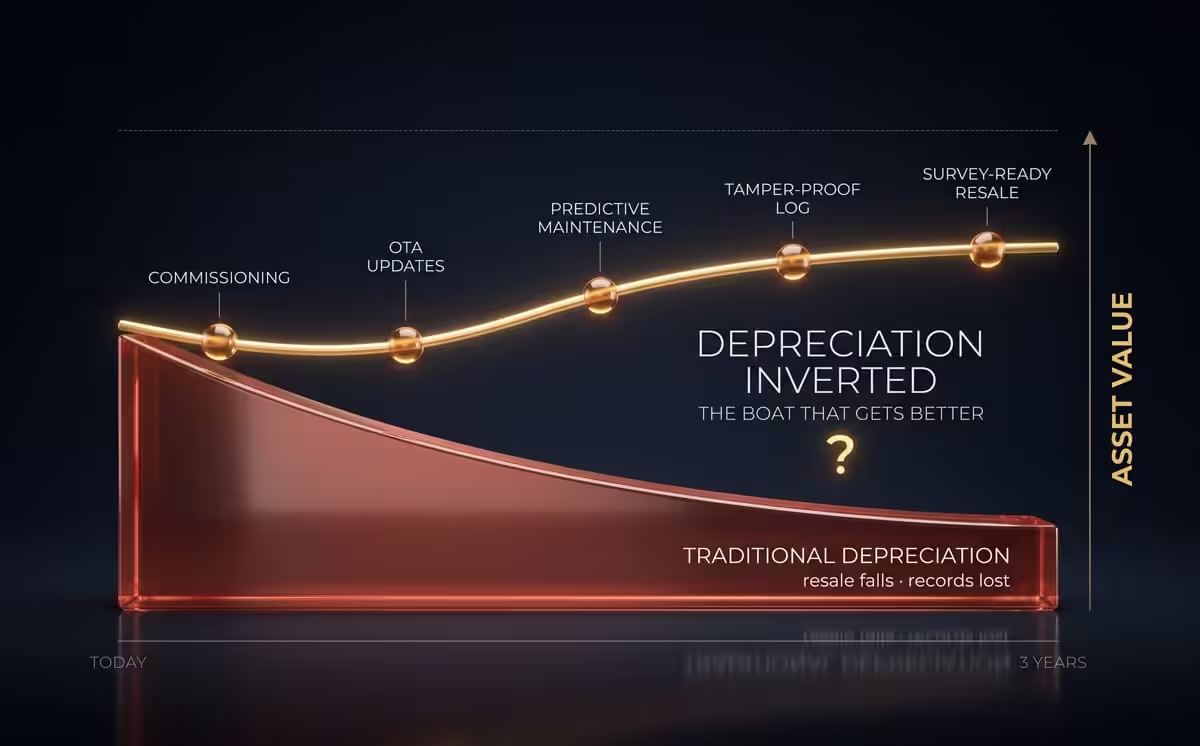
Depreciation inverted with the vessel log
02

New vessels get better over time. Depreciation inverted?

The Digital Twin creates a permanently connected, data-generating asset. Feedback improves the asset.

SituationTesla keeps a live digital replica of every car it sells — hundreds of sensors feeding real-time battery, motor and Autopilot data — and improves the fleet over the air, so the twin sees the problem before the owner does. BMW runs real-time 3D twins on NVIDIA Omniverse: the fleet teaches the factory, and the factory improves the fleet.

ComplicationA boat is assumed to decay from launch day. No complete record exists of how it was built, run or maintained, so the market prices in decline — depreciation is the default.

QuestionCan a new vessel improve with age — inverting its depreciation?

Answer

Quasar’s Digital Twin is created and populated with dated records during build and commissioning, then stays with the hull as a permanently connected asset — continuous feedback and predictive maintenance, with any sub-standard element caught before it costs the owner convenience or confidence. Because the record is complete and tamper-free, it can be handed to a surveyor at resale as documented evidence of how the vessel was built, run and maintained. Less depreciation, a stronger resale case, an asset that earns its value over its life — and a builder relationship that deepens for as long as the boat is on the water.

Depreciation inverted with the vessel log

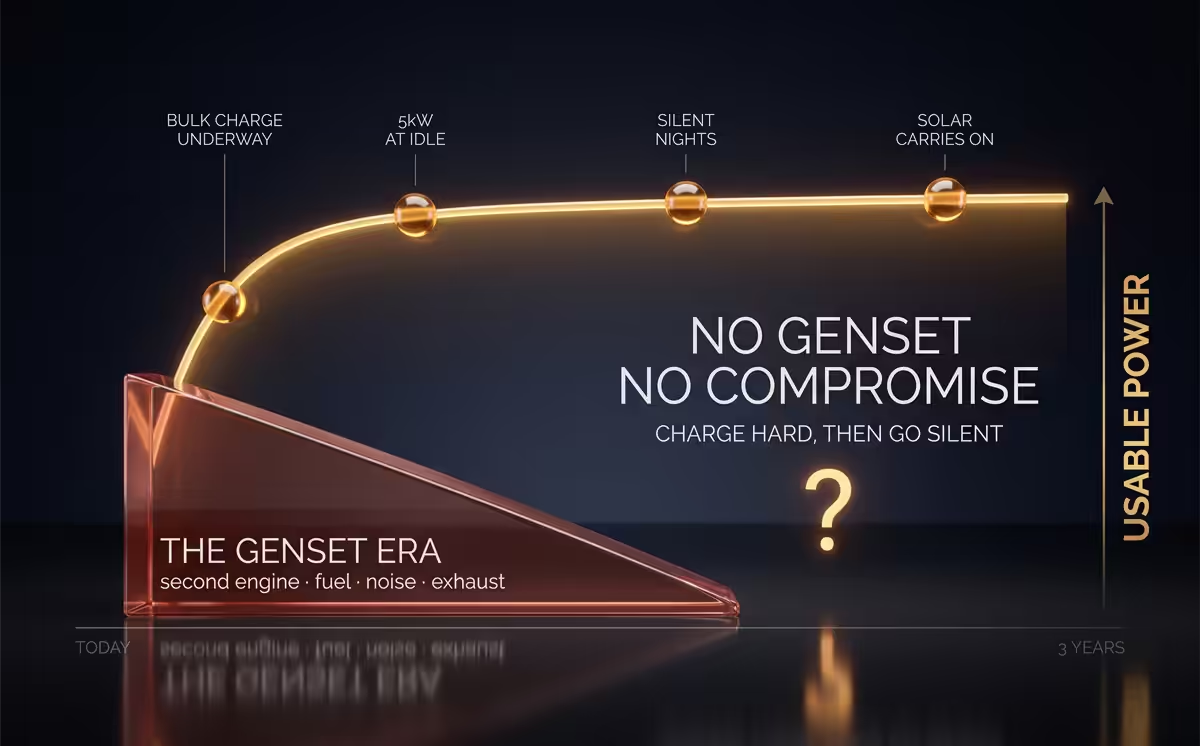
Genset era is over — charge hard as you can, then go silent
03

Can you run your boat with no genset?

DC generation is more than 30% more efficient than AC — enough, in most cases, to charge fast while the main engine is already running, then run the night in silence on batteries alone. No second engine. No exhaust at anchor. No generator droning through dinner.

SituationMild-hybrid cars solved this a decade ago: a 48V Belt Motor Generator bolted to the engine they already have pours high DC power into a lithium battery in minutes, then feeds it back as torque assist — one belt-driven unit, no second machine, a quieter and cheaper drivetrain.

ComplicationBoats still carry a second engine just to make power. The genset brings its own fuel system, its own maintenance schedule, exhaust at anchor and a drone through dinner — and AC generation is more than 30% less efficient than DC.

QuestionCan the genset be deleted entirely?

Answer

Safiery’s BMG fits a diesel engine as primary or secondary alternator on the crankshaft pulley already there: up to 10 kW of highly efficient charging, and more than 5 kW even at idle, straight into the 48V lithium bank. That is bulk charging in the time it takes to motor out of the anchorage — then everything switches off and batteries and solar carry the night in silence. One integrated, DC-native unit replaces the genset, its fuel, its noise and its upkeep, and the boat runs cleaner, quieter and cheaper for the life of the hull.

Genset era is over — charge hard as you can, then go silent

EIS creates incredible lithium battery safety and capacity
04

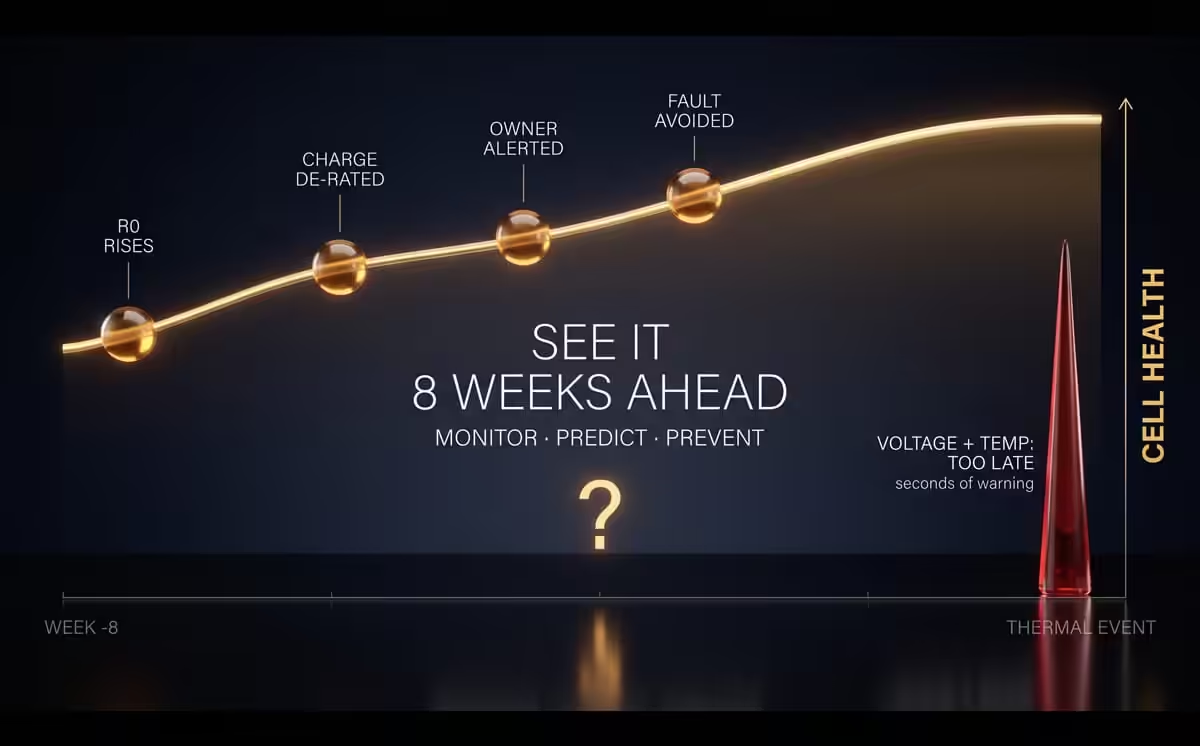
Can you see lithium battery bank issues 8 weeks ahead?

New technology born in electric vehicles now reads the resistance inside each cell while the battery is live and working — spotting trouble weeks before voltage or temperature ever move. The battery tells you it is getting sick long before it fails.

SituationThe lithium battery is an EV’s single biggest cost, so carmakers moved a piece of laboratory equipment into the battery itself: Electrochemical Impedance Spectroscopy (EIS), capturing up to four resistance values inside every cell — predicting safety events before they happen, tracking ageing cell by cell, and letting the battery run close to its true limit.

ComplicationMarine lithium is still judged from the outside, by voltage and temperature — which only move once trouble has already arrived. The industry reflex remains detect, isolate, flood.

QuestionCan a marine battery warn you of trouble weeks before it fails?

Answer

Safiery applied NXP’s automotive EIS chipset to marine lithium. The Quasar BMS reads each cell to 10 microohm resolution and flags a developing fault up to eight weeks ahead — protected by provisional patents AU 2026901047 and AU 2026907199, and engineered for the way boats actually store energy: many 48V batteries in a parallel bank, each individually watched. The system moves from detect-isolate-flood to monitor, predict, prevent: full performance and full design life from the battery, safety that keeps you aboard, and a tamper-proof health record that stands behind the warranty and travels with the boat at resale.

EIS creates incredible lithium battery safety and capacity

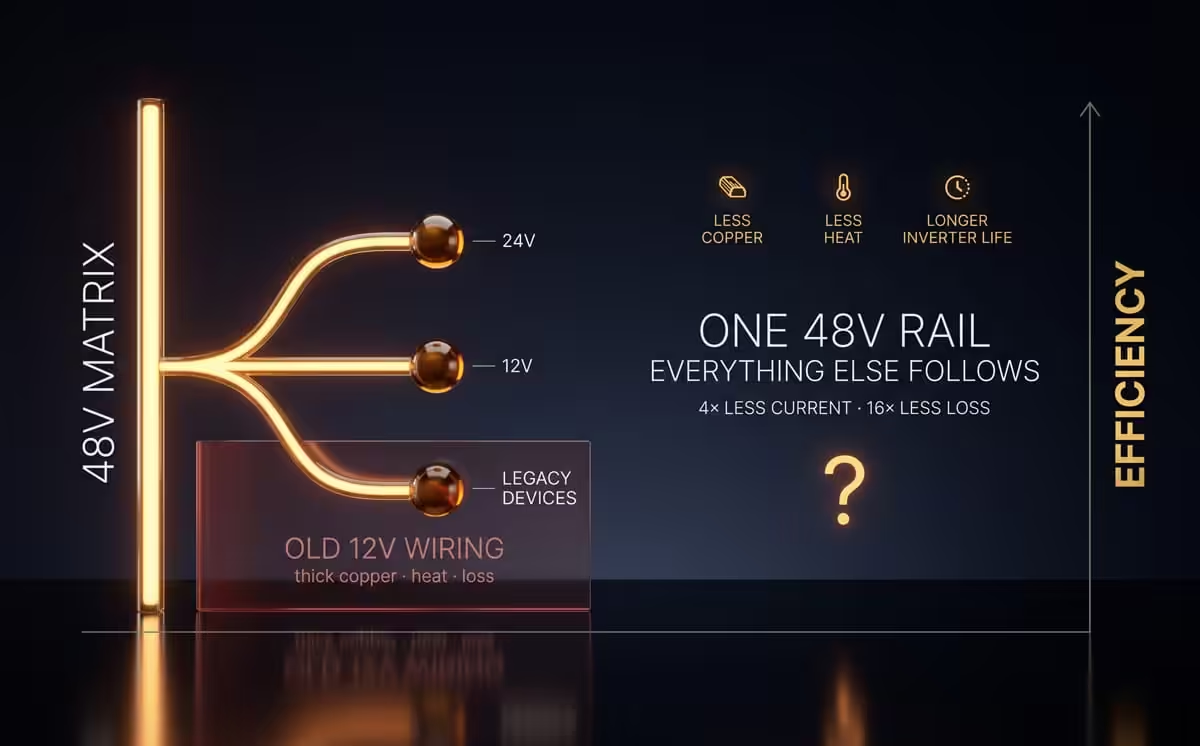
48V matrix of power conversion to 12V or 24V, with bidirectional charging
05

The advantage of a 48V energy matrix running 12V and 24V devices?

Build the boat’s energy store at 48V, then feed the 12V and 24V equipment from it — and you cut cabling cost, cut heat, and make the inverter/charger last longer. The physics does the work for you.

SituationLed by Tesla’s Cybertruck and followed by Ford, GM and Volkswagen, cars are moving from 12V to 48V: four times less current for the same power, up to sixteen times less heat lost in the harness, thinner and cheaper cable — all while staying below the shock-hazard threshold. Proven 12V devices stay aboard, fed by DC-DC conversion from the 48V rail.

ComplicationBoats are still wired at 12V and 24V: heavy copper through the hull, waste heat in confined engine spaces, a hard-worked inverter/charger — and no headroom as onboard loads keep climbing. Outboards add a twist: they must draw a small external demand at idle or they choke, then take far more as RPM rises — which needs a variable-power, bidirectional DC-DC to do cleanly.

QuestionWhy build the energy store at 48V when the devices aboard run at 12V and 24V?

Answer

Safiery builds the vessel around a 48V lithium matrix and steps down to 24V and 12V for the legacy devices — navigation, lighting, pumps — through integrated bidirectional DC-DC. The result: dramatically less copper, far less waste heat, an inverter/charger that runs cooler and lasts longer, and headroom to absorb tomorrow’s loads without rewiring the boat. The Scotty range — 12V/24V→48V, 48V→400V and 48V→48V, all bidirectional — also balances power between hulls on electric catamarans, where each hull carries storage beside its motor/generators, optimising hydrogeneration when the hulls produce different results.

48V matrix of power conversion to 12V or 24V, with bidirectional charging

Frameless glass, universal displays throughout the boat
06

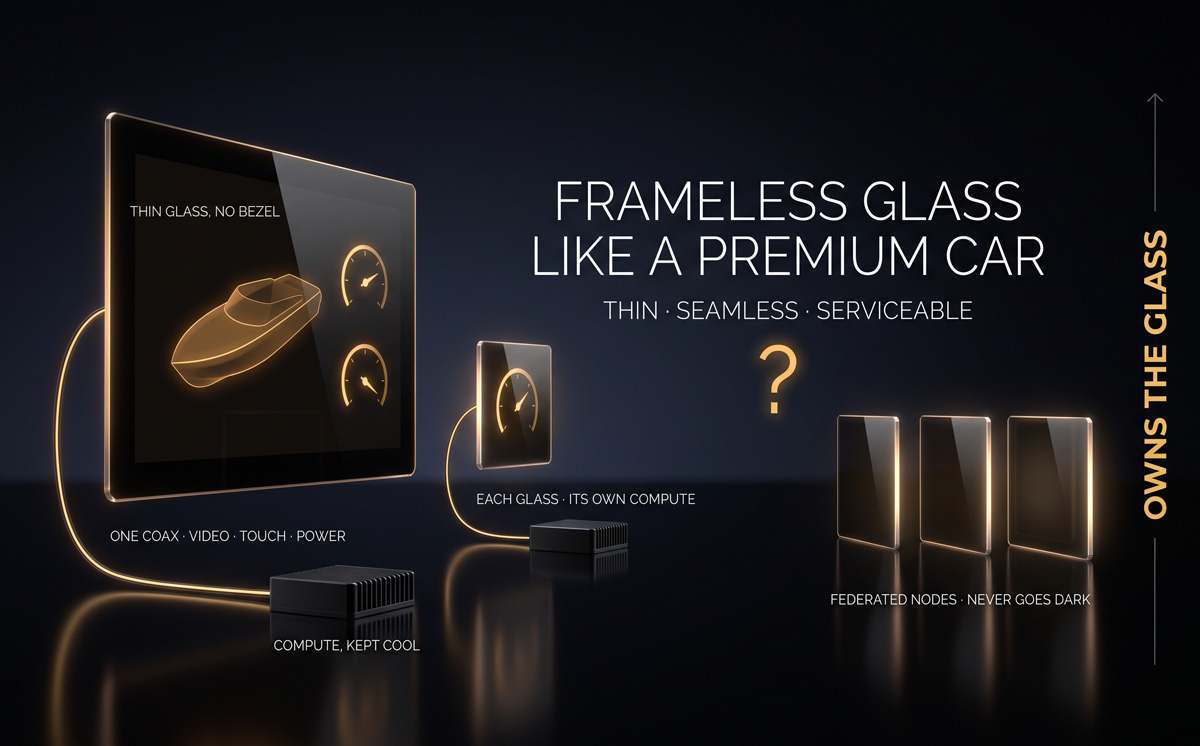
Can your helm be frameless glass that never blacks out?

The screen mirrors modern EVs — thin glass at the front, the compute section located remotely, somewhere cool. There is one cable between them: a robust, automotive-developed coax.

SituationCars threw out the bolt-in head unit and the cluster of dials for sweeping frameless glass — Mercedes’ Hyperscreen, the curved panels of Porsche and BMW. The clever part is behind it: the compute lives in a cool, serviceable bay and drives the glass down a single thin SerDes coax (FPD-Link / GMSL) — video forward, touch back, power along — with each display its own node.

ComplicationThe marine MFD is the opposite: the computer cooks in the ~60°C cavity behind sun-loaded glass, and one black box is both the single point of failure at the helm and the vendor’s grip on the customer.

QuestionCan the helm be premium frameless glass — and never go dark?

Answer

Safiery’s QUASAR glass is built on exactly the automotive architecture: frameless bonded tiles — the glass is the only edge you see — deployed identically at the helm, in the saloon or on a cabin wall. The computer sits in a cool machined enclosure a technician can actually reach; one rugged marine coax carries video, touch and power to every tile. Because the system is federated — each screen an independent node — a single failure never blacks out the bridge, and repair is a panel at a time, not a console. Every tile runs open QUASAR software over open protocols (Signal K, MQTT, Matter): the glass is a canvas the builder owns, not a proprietary plotter that owns the customer.

Frameless glass, universal displays throughout the boat

Halve engineering and installation costs while getting full current measurement of every device
07

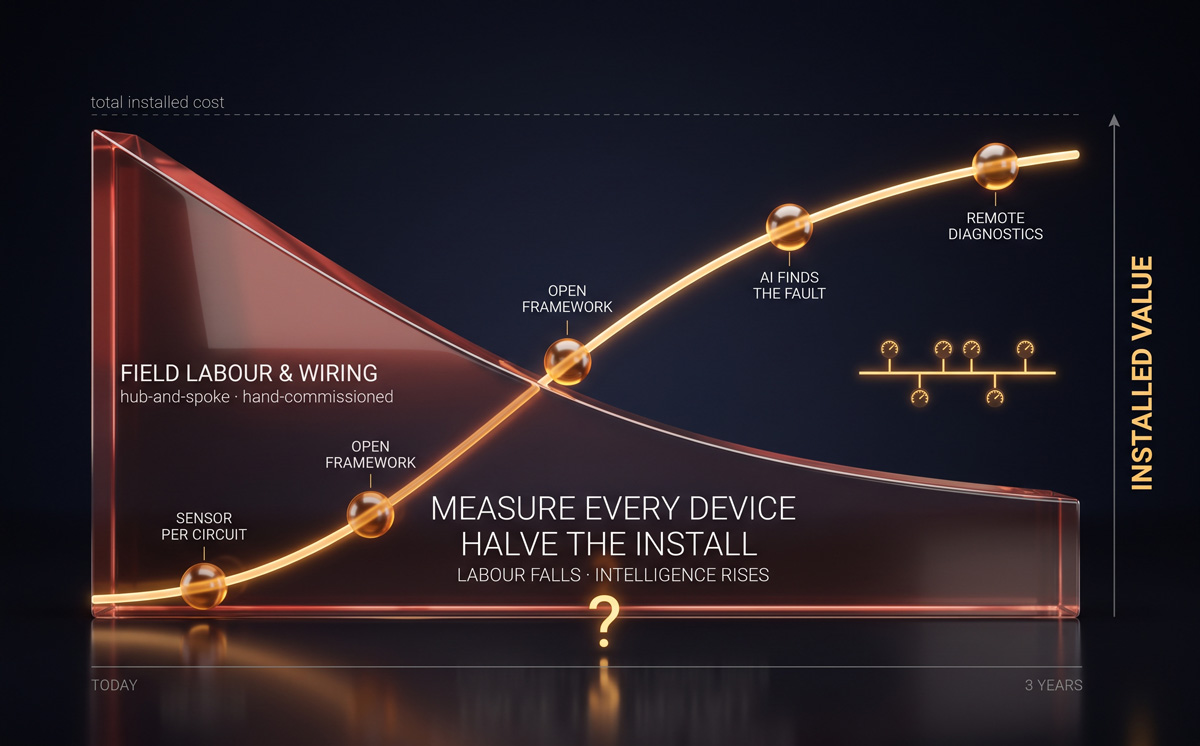
Can you measure your power in each DC and AC device to determine anomalies?

Measuring the actual current to each load is easy once it’s designed in — and then the system knows the nav light has failed, even in daylight when no one would notice.

SituationBuilding automation ran through the 1980s on proprietary hard-wired systems — roughly 85% of installed price was labour. Then cheap networked sensors and open protocols (BACnet, Tridium’s Niagara) arrived: install-and-commission cost fell to about 50%, and with today’s AI-and-cloud platforms to roughly 30%. Open-framework challengers went from near-zero to major players in about five years; incumbents wedded to hard-wired architecture saw their dominance more than halve.

ComplicationA marine electrical system today looks like building automation forty years ago: hub-and-spoke wiring, a dedicated run to every load, a proprietary hub at the centre — with installation labour around two-thirds of total cost, and every fault a mystery solved by a technician on board.

QuestionCan every circuit be measured — so every anomaly is caught automatically?

Answer

Safiery makes the same move buildings made: a single 48V point-of-load bus, an open framework (Matter), and an electrical sensor on every circuit. STAR controllers — already Matter-certified — sense current across solar, inverters, DC-DC, the BMG alternator and every DC and AC rail. Because every load is measured and named, the system learns each one’s normal signature and flags the exception itself: a nav light drawing nothing when it should be lit, a pump cycling too often, a circuit trending toward failure — with load shedding per circuit and diagnostics run remotely, often before a fault becomes a callout. The cost curve mirrors buildings: installed cost more than halving as field labour falls and intelligence rises.

Halve engineering and installation costs while getting full current measurement of every device

Sail-by-wire beats hydraulics with simplicity
08

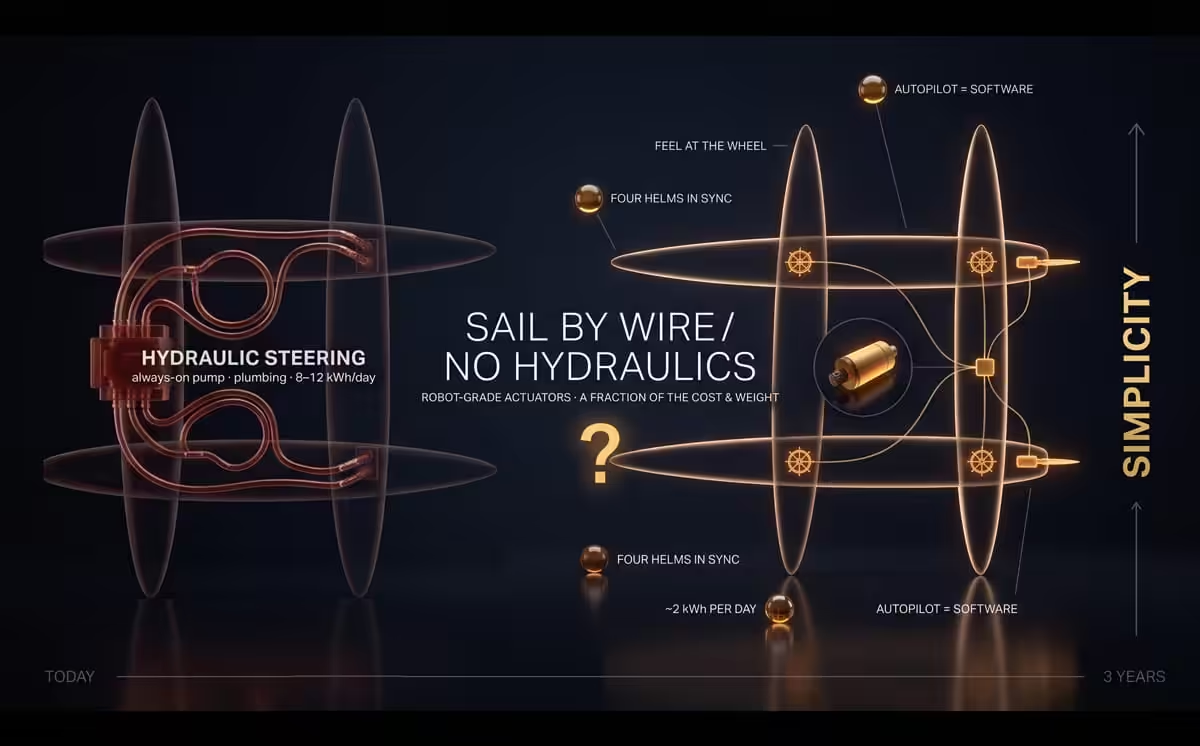
Can you steer and sail by wire, with no hydraulics?

Steering that draws almost no energy, weighs a fraction of a hydraulic system, and keeps up to four helm stations in perfect sync — with genuine feel at the wheel, not a synthetic imitation of it.

SituationRobotics has commoditised what marine has always paid dearly for: sealed units combining motor, gearbox, dual encoders and closed-loop force drive, produced in volume for robot joints — while off-highway equipment swapped hydraulic cylinders for smart electric actuators built for shock, vibration and salt spray. Electric actuation draws power only while actually moving, reports its true load, and is back-drivable.

ComplicationHydraulic steering must hold pressure continuously whether anything moves or not — eight to twelve kilowatt-hours a day — plus the pump, hoses through both hulls, fluid and bleeding. Multiple helm stations sync poorly, and the feel at the wheel is synthetic or absent.

QuestionCan a boat steer and sail by wire, with genuine feel and no hydraulics?

Answer

Safiery’s sail-by-wire replaces hydraulics with compact helm units about 60 mm across — each simultaneously the wheel’s position encoder and its feel motor — driving electric rudder actuators through a single safety-certified controller. Up to four helm stations run servo-synchronised, with TAKE HELM handing authority cleanly between them. The feel is measured, not invented: rudder load is sensed at the blade and replayed as resistive torque at the active wheel — real weather helm, real load building in a gust. Each hull’s actuator, sensor, bus and battery feed is independent, and with all power lost the actuator back-drives so the emergency tiller still works. Steering runs on under 2 kWh a day; the hardware is roughly 85% cheaper than incumbent hydraulic steer-by-wire — and once the certified wheel-to-rudder foundation exists, autopilot, auto-sailing and auto-docking are pure software. The investment is made once, in the wire.
Sail-by-wire beats hydraulics with simplicity

Auto-docking uses radar and cameras — just speak the side to dock
09

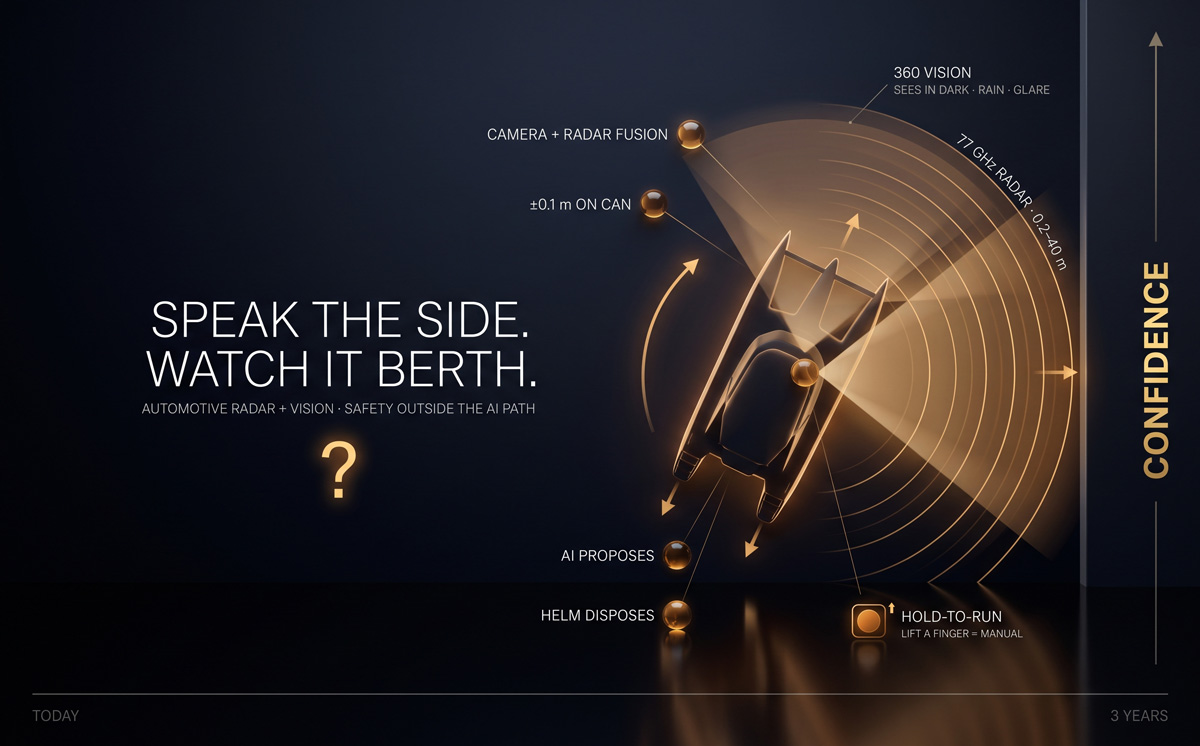
Can your boat dock itself — safely — in the dark and the rain?

Say which side, hold the button, and watch the boat crab sideways onto the berth — seeing the dock the way a self-driving car sees the road, with the human hand always one release away from taking over.

SituationWaymo — millions of fully driverless miles in — fuses cameras with radar and lidar precisely so the vehicle keeps seeing when one input is blinded by glare, rain or darkness. Millimetre-wave automotive radar measures range and closing speed as physics, not inference; a decade of automotive volume has made it cheap, rugged, weatherproof and CAN-native.

ComplicationDocking is the most stressful ninety seconds of an owner’s day — and it happens in exactly the conditions that defeat a camera. One lens is not a safety case; the serious autonomy players build on sensor fusion and redundancy.

QuestionCan a boat dock itself safely when vision fails — with the human always in command?

Answer

QUASAR auto-docking fuses a 360° camera view of berth, piles and cleats with 77 GHz automotive radar — a module carrying five distinct radar modes, from 200 mm at the fender to 40 m across the harbour, placing the dock to about 100 mm in darkness, rain and glare. An electric catamaran is close to the ideal platform: twin widely-spaced shafts, fly-by-wire rudders and a bow thruster give control in every direction, so the boat crabs bodily sideways onto the berth. The safety architecture follows every QUASAR module: the AI proposes, certified deterministic control disposes, and a radar anti-collision watchdog wired straight to that controller involves no AI at all. The skipper picks the side by voice and holds a button for the whole manoeuvre — lift a finger and the boat is instantly manual. It trains on the skipper’s own recorded dockings, berth by berth, the home marina becoming a remembered manoeuvre — riding entirely on hardware the boat already carries, because the actuation was paid for once, in the wire.
Auto-docking uses radar and cameras — just speak the side to dock

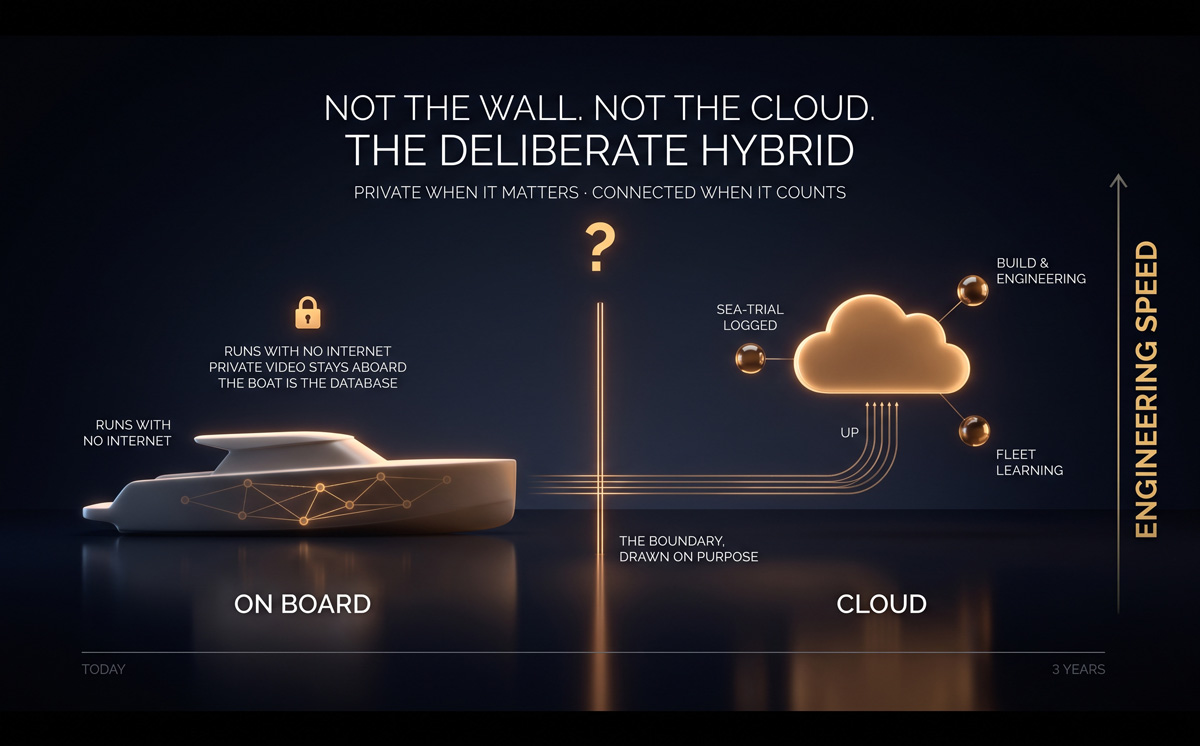
Hybrid cloud combines the local secure application with the cloud, for reduced design engineering cost
10

The finale — should your systems live behind a wall, or in a hybrid cloud?

The boat needs to run with no internet, and keep some video entirely private — yet the build, the engineering and the sea trial are transformed by being connected. The answer isn’t one or the other. It’s both, done deliberately.

SituationIBM was the definition of the walled garden — until 2018, when it bought Red Hat and bet the company on hybrid cloud and open source, reasoning that no single company could build the future alone inside its own walls. In March 2026 it doubled down, completing the $11 billion acquisition of Confluent to stream live, trusted data across on-premises and cloud for AI models and agents.

ComplicationMarine systems began as walled gardens too — closed hardware, closed software, closed data. Yet the boat must run with no internet and keep private video entirely aboard, while the build, the engineering and the sea trial are transformed by being connected.

QuestionWall or cloud — where should a vessel’s systems live?

Answer

Both, with the boundary drawn on purpose. Quasar’s hybrid-cloud architecture keeps the vessel fully self-reliant: the boat is the database, everything essential works offline — at anchor, offshore, mid-ocean — and private video never touches the cloud unless the owner chooses. When connectivity is there, the cloud earns its place, most of all during build, engineering and sea trial: live commissioning data streams ashore, so engineering that once happened on board, by hand, one boat at a time is done remotely, in parallel, informed by every other hull in the fleet — a realistic target of designing and engineering a vessel’s systems in around a third of today’s time. The wall gave control; the pure cloud gave scale; the deliberate hybrid gives both — privacy and self-reliance for the owner, engineering capacity multiplied for the builder.

Hybrid cloud combines the local secure application with the cloud, for reduced design engineering cost

We have an answer to each of these questions with proven hardware and software.

We call the system QUASAR.
Meet the team on the floor

Come to our Stand 5.419 at METSTRADE

To discuss these questions and your application, find the Safiery team at Stand 5.419, RAI Amsterdam, Nov 17–19 2026.

Download the October 2026 product brochure (PDF, 20 MB).

sales@safiery.com