

Alternator Charging Highest Power and Efficiency
Why the Safiery 48V Bidirectional Motor Generator Is the Most Powerful Alternator Replacement on the Market
If you’ve been searching for a high-power alternator upgrade for your Yanmar, Volvo Penta, Cummins, or Caterpillar engine, you’ve almost certainly hit a ceiling. Traditional alternators were never designed for the demands of modern lithium battery banks, high-capacity DC power systems, or smart energy management networks. The Safiery 48V Bidirectional Motor Generator (BMG) wasn’t designed to compete with traditional alternators — it was designed to make them obsolete.
This is a deep technical dive into why.
What Is a Bidirectional Motor Generator — and Why Does It Matter?
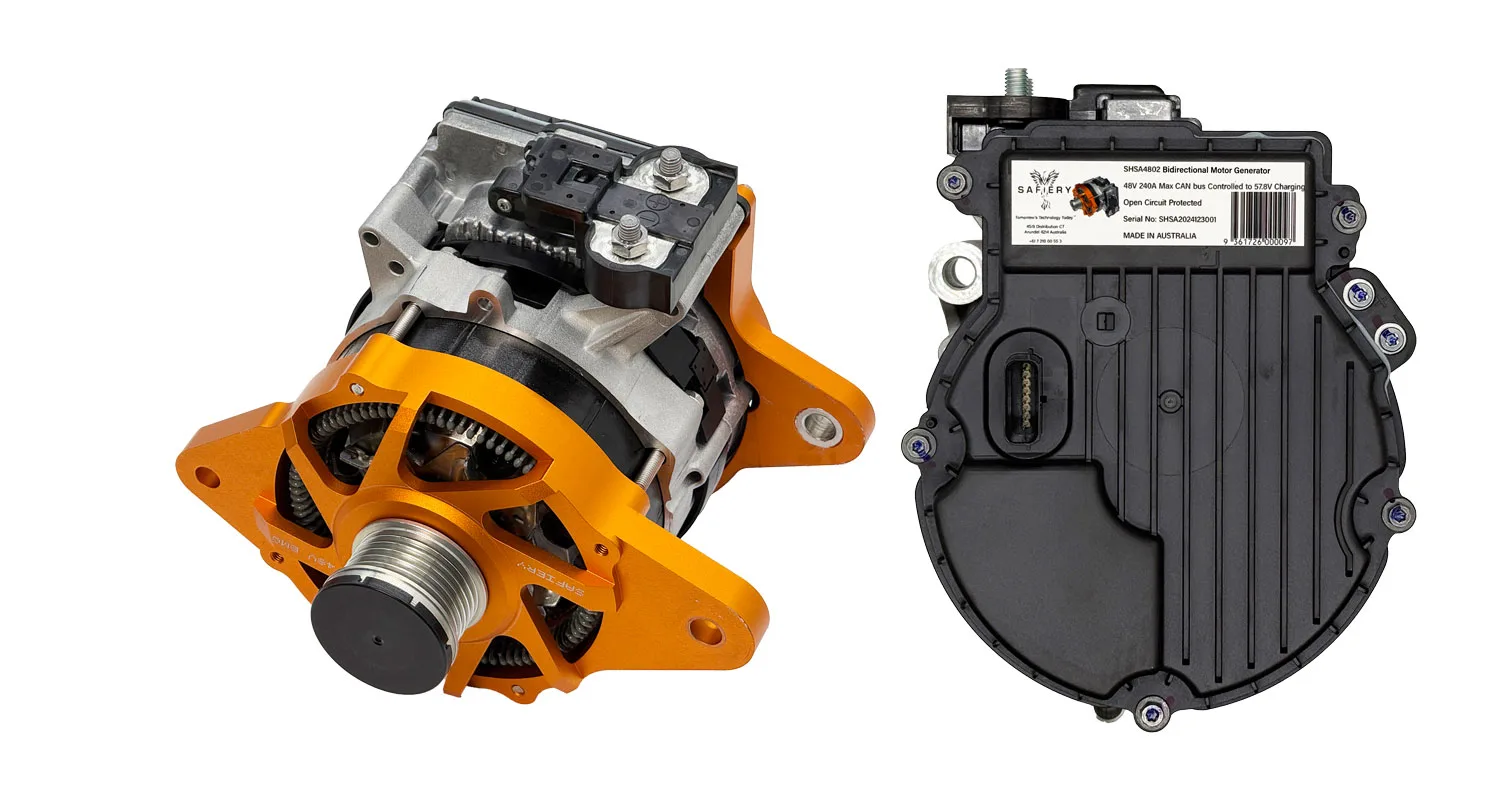
A bidirectional motor generator occupies the same mechanical position as a conventional alternator on your engine. It mounts to the engine block, it’s driven by the same serpentine belt from the crankshaft pulley, and it charges your battery bank. That’s where the similarity ends.
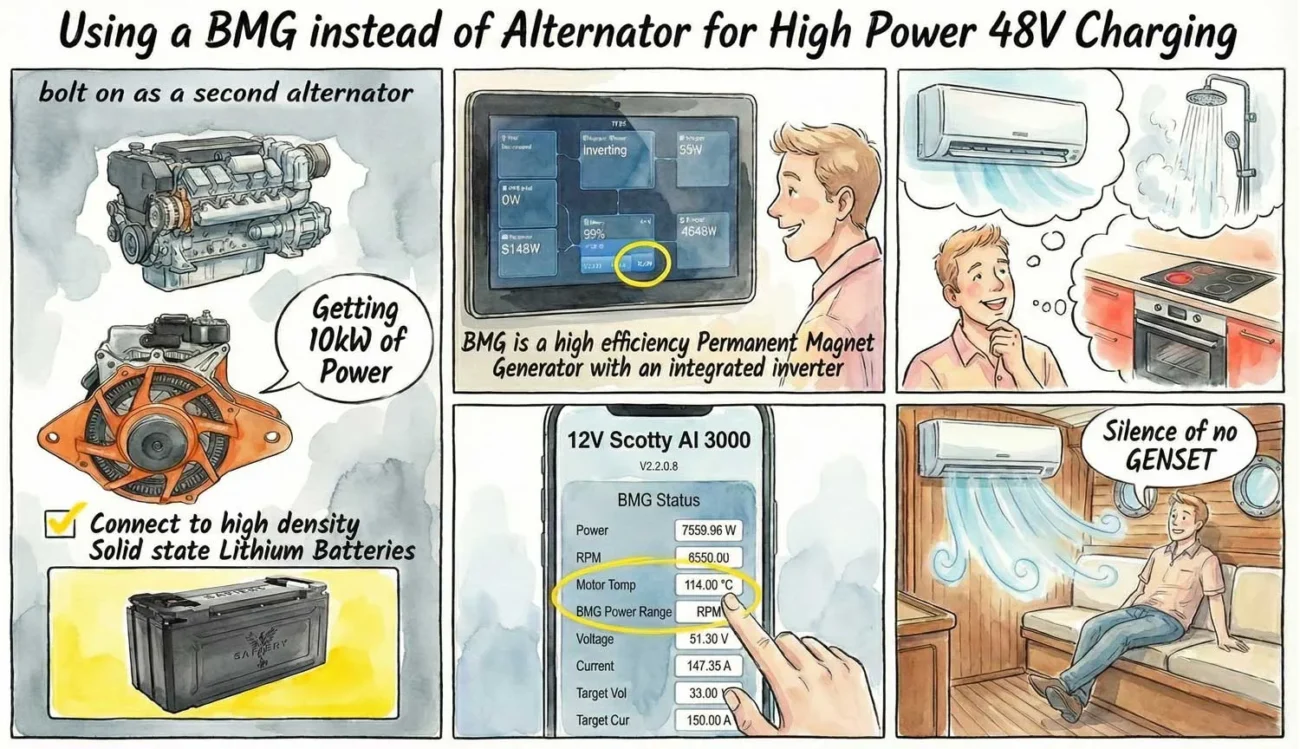
Where a conventional alternator converts mechanical rotation to AC power and then rectifies it crudely to DC using diodes, the Safiery BMG is a fully digital, AI-controlled, dual three-phase permanent magnet machine with an integrated inverter — a completely different class of device.
The “bidirectional” designation is not marketing language. The BMG can operate as a high-output DC generator or as an electric motor. In motor mode, it can be used to crank the engine, assist engine torque during acceleration, or recapture regenerative energy during deceleration. No traditional alternator can do any of this.
The Core Technology Stack: What Makes It a Different Kind of Alternator
Asymmetric Dual Three-Phase Stator — Redundancy and Extreme Power Density
The BMG uses two completely independent three-phase stator windings inside a single housing. They are wound asymmetrically — shifted 30° electrical rather than the symmetric 60° arrangement. This creates a 12-pulse system when rectified, which has profound consequences for power quality and reliability.
What this means in practical terms:
- 12-pulse rectification dramatically reduces output ripple — ripple amplitude is reduced by 75% compared to a standard 6-pulse single-winding alternator
- 5th and 7th harmonic cancellation — the two windings cancel each other’s most damaging harmonics, resulting in substantially cleaner DC power
- Redundancy — if one winding experiences a fault, the BMG continues operating on the other at 50% power. A conventional alternator fails completely under the same scenario
- 30–40% better heat dissipation — distributed losses across more conductors mean lower hot-spot temperatures and extended insulation life
- Reduced torque ripple — only 3.4%, compared to the high ripple that causes vibration and bearing wear in conventional alternators
This dual-winding architecture means the BMG is categorically more reliable than any single-winding alternator in mission-critical marine, commercial vehicle, or off-grid applications.
Hybrid Excitation Technology — Full Power at Idle
This is the technology that separates the BMG from every other high-output alternator on the market when it comes to low-RPM performance.
Traditional alternators are wound-field machines. They struggle at idle because field current is proportional to speed — low RPM means low excitation and therefore low output. Aftermarket smart regulators like Balmar and Wakespeed improve on this but cannot overcome the fundamental physics.
The Safiery BMG uses Hybrid Excitation — combining permanent magnet (PM) excitation with wound-field control. The permanent magnets provide a strong baseline flux at any RPM, while the wound field is used to modulate voltage and torque precisely across a wide speed range.
The result:
- Effective operation from 20% to 200% of rated speed
- Voltage regulation accuracy of ±0.5% (versus ±2% for a conventional alternator)
- Voltage regulation range from 50% to 150% of nominal — extraordinary flexibility
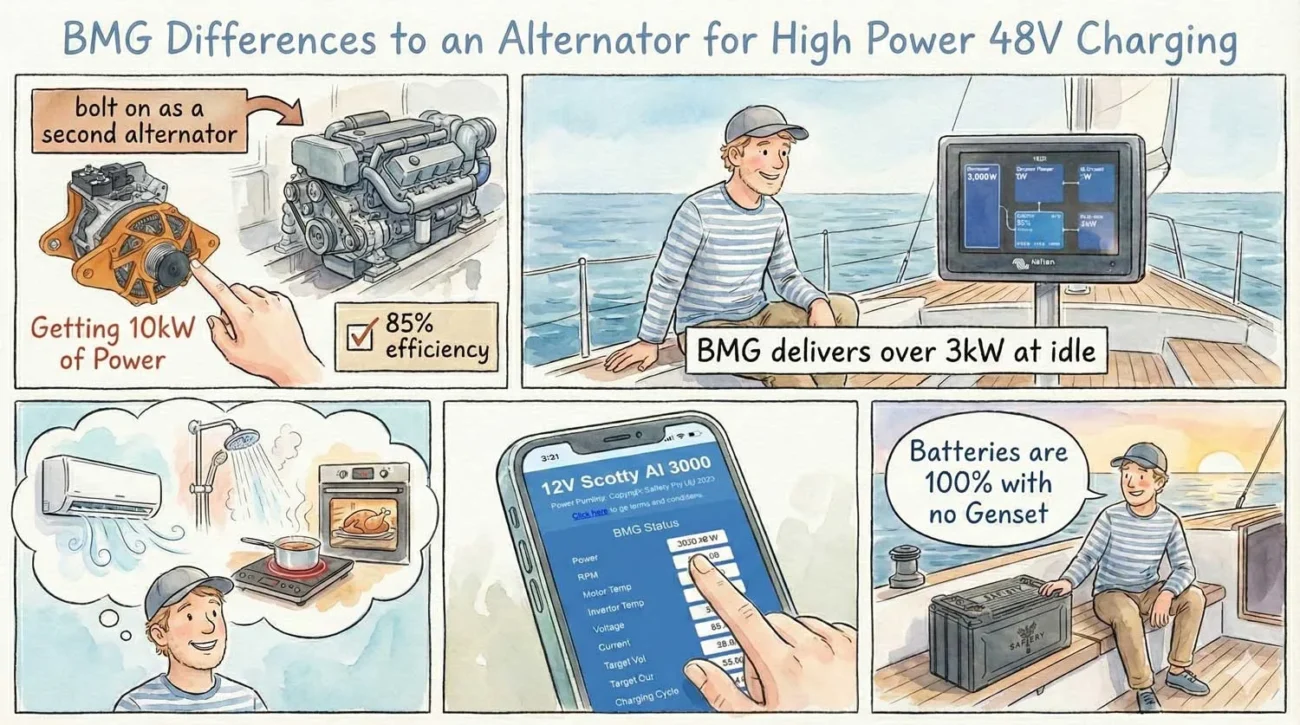
- 5,000W of output power at engine idle when paired with the Scotty AI V3 and a 12V alternator
- Short-term overload capability of 150–200% for burst power demands
- Safe, controlled shutdown — the field can be reduced to zero for maintenance
- Redundant excitation — if the wound field fails, the PM alone continues to provide usable output
No bolt-on regulator upgrade for a conventional alternator can replicate this behaviour. The physics simply don’t allow it.
Hairpin Windings — Maximum Copper, Minimum Resistance
The BMG uses hairpin copper windings — the same manufacturing technology used in premium automotive traction motors. Hairpin conductors are pre-formed rectangular copper bars rather than wound round wire, which allows dramatically higher slot fill factors.
The benefits:
- Lower winding resistance — maximises efficiency and reduces heat generation
- Superior thermal coupling to the housing and cooling system — heat gets out faster
- Tighter manufacturing tolerances — consistency in mass production
- 10–15% higher power density in a given frame size
Paired with the dual three-phase architecture, hairpin windings allow the BMG to achieve continuous output ratings that would be impossible in an equivalently sized conventional alternator.
Space Vector Pulse Width Modulation (SVPWM) — Precision Torque Control
Rather than the simple diode bridge of a conventional alternator, or even the basic PWM control of many inverter-driven machines, the BMG uses Space Vector PWM — the same control algorithm used in high-performance industrial servo drives and EV traction inverters.
SVPWM transforms the three-phase system into a two-dimensional space vector using Clarke transformation (αβ coordinates). Eight possible switching states create six active vectors and two zero vectors. The reference voltage vector is synthesised by time-averaging adjacent vectors.
Why this matters for your application:
- 47% higher DC bus utilisation compared to sinusoidal PWM — more power out for the same silicon
- Field weakening — extends the operating speed range by controlling d-axis current, allowing high power across a wider RPM band
- Unity power factor control — minimises reactive power for maximum efficiency
- Full torque control — Scotty AI reads the generator torque at every moment and can instantly limit power if the engine is being overloaded. This is critical in small marine engines (30–40hp) where a conventional alternator can stall an engine by drawing too much torque with no feedback mechanism
- Reduced torque ripple — smoother mechanical loading on the engine, bearings, and belt
The inner control loop runs in dq (direct-quadrature) reference frame — the gold standard for permanent magnet machine control.
AEC Q101/Q200 Certified Inverter — Automotive-Grade Reliability
The integrated inverter uses switching devices certified to AEC Q101 (semiconductor) and AEC Q200 (passive component) automotive reliability standards. These are the same qualification standards required for components used in vehicle safety systems.
Qualification testing includes:
- High Temperature Operating Life (HTOL): 1,000 hours at maximum junction temperature
- Temperature cycling: −65°C to +150°C, 1,000 cycles minimum
- Mechanical shock: 1,500G at 0.5ms duration
- Variable frequency vibration: 20–2,000Hz
- Moisture testing: 96–264 hours accelerated humidity
- Temperature Humidity Bias: 85°C / 85% RH for 1,000 hours
The inverter carries Grade 1 (−40°C to +125°C) and Grade 0 (−50°C to +150°C) components throughout. This is not consumer electronics — it is automotive-grade power electronics designed for extreme environments.
Power Output: The Numbers That Matter
Operating Condition | Safiery BMG + Scotty AI V3 | Best-in-Class Smart Alternator |
At engine idle | 5,000W | 200–800W |
At 1,800 RPM (cruising) | 8,000W | 5,000–6,000W |
Peak output | 11,000W | 6,000–7,400W |
Efficiency at operating temp | 85% (net) | ~50% when hot |
Inverter type | AEC Q-certified digital inverter | Diode bridge |
Temperature monitoring | 4-point | 1-point |
Torque protection | Yes — real-time AI | No |
Load dump protection | 100% guaranteed | Not available |
Bidirectional capability | Yes | No |
The efficiency difference is not marginal. A conventional alternator running hot operates at approximately 50% efficiency — meaning half of every watt of mechanical power drawn from your engine is wasted as heat. The BMG operates at 90% motor efficiency and 94% inverter efficiency for a net system efficiency of 85%, even at operating temperature. If you are running a large lithium bank and charging it for hours each day, this difference compounds into significant fuel savings and reduced thermal stress on your engine.
Compatible Engines: Yanmar, Volvo Penta, Cummins, Caterpillar, Mercedes-Benz Sprinter
One of the most significant engineering achievements of the Safiery BMG is the depth of engine compatibility. The mounting system has been developed across four distinct configurations to cover the broadest possible range of marine, commercial, and industrial engines.
Yanmar Marine Engines — SHSA4803 J180 Mount
The SHSA4803 is purpose-engineered for Yanmar marine diesel engines using the J180 mounting standard. Safiery has developed a deep integration with the Yanmar engine range because of the prevalence of Yanmar power in the global sailing, motoryacht, and commercial vessel markets.
The J180 mount provides direct bolt-on installation to the factory alternator position. The over-running auto-clutch pulley (OAP) is standard, which is critical for protecting both the BMG and the engine belt drive from reverse shock loads — particularly important during engine start, load step changes, and the bidirectional torque reversals that occur when the BMG transitions between motor and generator modes.
For Yanmar users, the BMG solves one of the most persistent problems in liveaboard and passage-making sailing: the inability to fully charge a large lithium bank during a short engine run without overloading a small diesel. A 30hp or 40hp Yanmar running at idle produces enough mechanical power for the BMG to deliver 5,000W into the 48V bank. At cruising RPM, that rises to 8,000W or more. This means a 400Ah 48V lithium bank can receive a meaningful charge — potentially from flat to full — during a normal coastal passage engine run, without any modification to the engine itself.
Volvo Penta Marine Engines — SHSA4804 Volvo Mount
The SHSA4804 is designed for Volvo Penta marine diesel engines across the D2 through D11 range — covering everything from the compact D2-40 single-cylinder common in 35–40ft production sailboats up to the D11 inline-six found in serious powerboats and commercial vessels.
This is a broad sweep of the mid-range marine market. The Volvo Penta D-series engines are among the most widely installed marine diesels globally, and the availability of a native BMG mount for these engines represents a significant capability for installers and boatbuilders working with Volvo power.
The SHSA4804 became available in mid-2025. For shipyards and refit yards working on Volvo-powered vessels, this mount enables the BMG to be installed without custom bracketry, reducing installation time and ensuring correct belt alignment geometry — both critical factors for long-term reliability in a marine environment.
Cummins and Caterpillar Engines — SHSA4801 Pad Mount
For operators running Cummins, Caterpillar, John Deere, or other heavy-duty commercial diesel engines, the SHSA4801 Pad Mount is the correct specification. This is Safiery’s highest-output variant, capable of a continuous 300A peak at 48V — representing up to 15kW of peak output power.
The pad mount design uses the SAE standard alternator pad mounting position common across the heavy-duty diesel engine ecosystem. Cummins QSB, QSC, QSL, and QSM series engines; Caterpillar C-series marine and industrial engines; and virtually any commercial diesel engine with a standard SAE pad mount position are compatible.
For workboats, commercial fishing vessels, offshore support vessels, emergency generator systems, and heavy transport vehicles running Cummins or Caterpillar power, the SHSA4801 delivers a level of alternator performance that was previously only available through dedicated stand-alone generator sets at a fraction of the size, weight, and complexity.
The SHSA4801 also includes the full bidirectional capability — motor mode is available for auxiliary engine starting, engine torque assist, and regenerative energy capture. For vessels running Cummins or Caterpillar power in hybrid or semi-hybrid configurations, this opens integration pathways that conventional alternator technology simply cannot support.
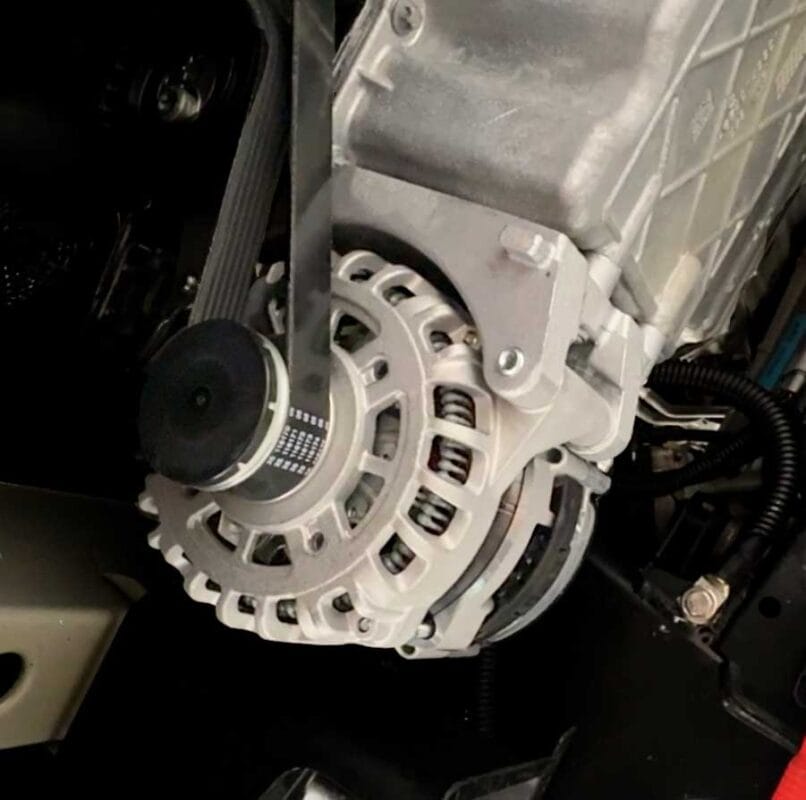
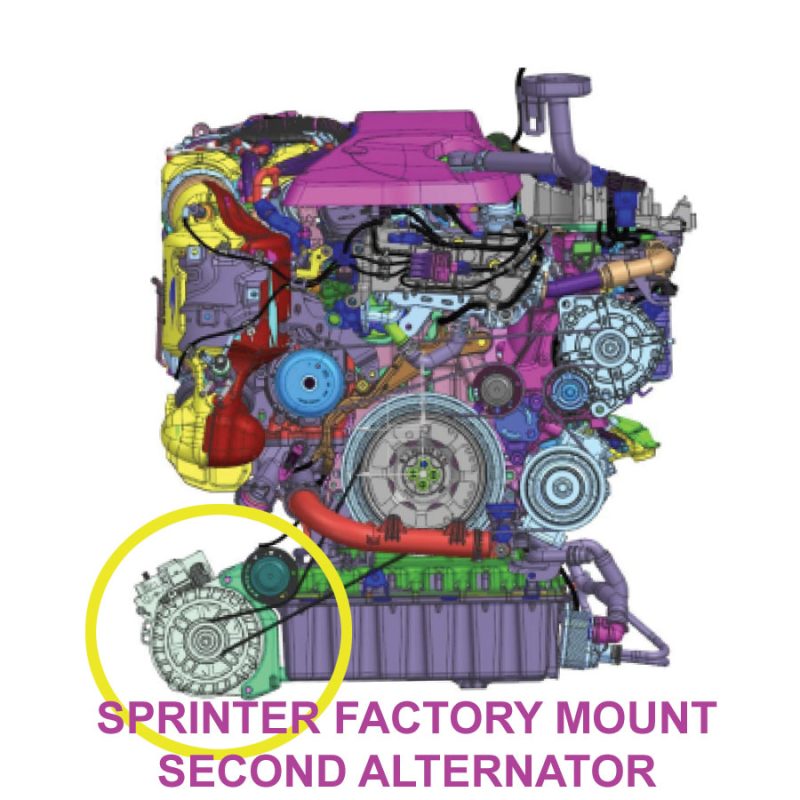
Mercedes-Benz Sprinter (N62 / 4-Cyl / 6-Cyl) — SHSA4802
For the rapidly growing Sprinter-based overland and commercial vehicle market, the SHSA4802 provides a factory-position integrated mount compatible with the N62 kit, 2025 model 4-cylinder, and prior-year 6-cylinder configurations. Safiery supplies genuine Mercedes-Benz mounting kits for installation to the factory-supplied second alternator position, making this a clean OEM-quality installation.
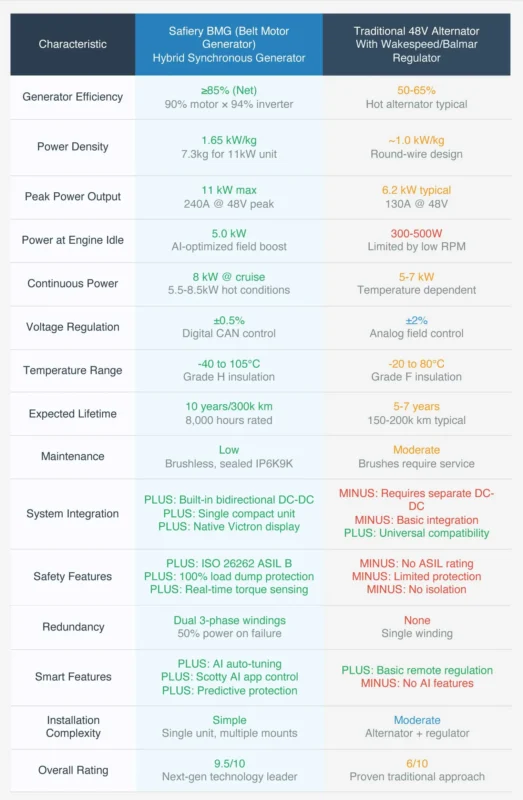
Why the BMG outperforms 48V Alternator with Wakespeed regulator
Here is the comparison between the traditional 48V alternator and a remote Wakespeed Regulator.
Scotty AI V3: The Brain That Makes the Alternator Intelligent
No description of the BMG is complete without discussing the Scotty AI V3 — the master controller that transforms the BMG from a sophisticated generator into an intelligent energy management system.
100% Digital CAN Control
Every other smart alternator regulator on the market — Balmar, Wakespeed, Zeus, MG Energy — controls the alternator through analogue field current. Scotty AI controls the BMG entirely via CAN (Controller Area Network) digital communication. This is not a subtle distinction. Digital control means:
- Zero analogue drift over temperature and time
- Instant, precise response to changing conditions
- Full bidirectional data flow — not just commands, but rich telemetry
- Integration as a native device on the Victron VE.CAN network
- Visibility on the Victron Cerbo GX and Ekrano GX displays as an alternator (requiring firmware v3.63 or later)
- Two independent CAN ports on the Scotty AI V3 — one dedicated to the BMG, one for the Victron network or CAN BMS
Real-Time Torque Management and Engine Protection
This is the feature that matters most in small marine engines. Scotty AI reads engine torque from the BMG in real time and can reduce or eliminate load instantly if the engine appears overloaded. For a 30hp or 40hp Yanmar, a conventional smart alternator drawing maximum field current can genuinely stall the engine or cause excessive black smoke under certain conditions. Scotty AI prevents this entirely — not by limiting maximum power to a conservative fixed level, but by continuously tracking the actual available torque and modulating power dynamically.
Load Dump Protection — Guaranteed
A load dump event occurs when the battery BMS opens its relay under charge, instantly disconnecting the charging source. This can generate voltage spikes of 60–80V or more on the alternator output — easily enough to destroy the alternator, the regulator, and any connected electronics. Conventional alternators with external regulators have imperfect protection. Scotty AI guarantees 100% prevention of load dump damage, regardless of whether the BMS stop-charge signal arrives slowly, is delayed by CAN latency, or fails entirely. The digital inverter control can reduce output to zero in microseconds.
Four-Point Temperature Monitoring
Scotty AI monitors four independent temperatures across the BMG system — motor temperature, inverter temperature, and additional thermal points. Performance derating begins at 120°C with a managed timer, allowing the system to continue operating at reduced power rather than shutting down abruptly. Maximum operating temperature is 140°C. Conventional alternators with a single thermistor have no visibility into internal inverter temperature and no capacity for graduated derating.
Power Arbitrage Between Two Sources
When the BMG is paired with a conventional 12V alternator on the same engine — which Safiery strongly recommends — Scotty AI performs continuous power arbitrage between the two sources. It maximises total power delivery into the 48V bank, balancing load between the BMG and the DC-DC section of the Scotty AI, while maintaining both within their temperature envelopes. During solar-backed idling scenarios, this capability can sustain up to 5,000W of total charging from the engine at idle — a number that no conventional alternator installation can approach.
Victron Energy Integration: A Native Ecosystem Partner
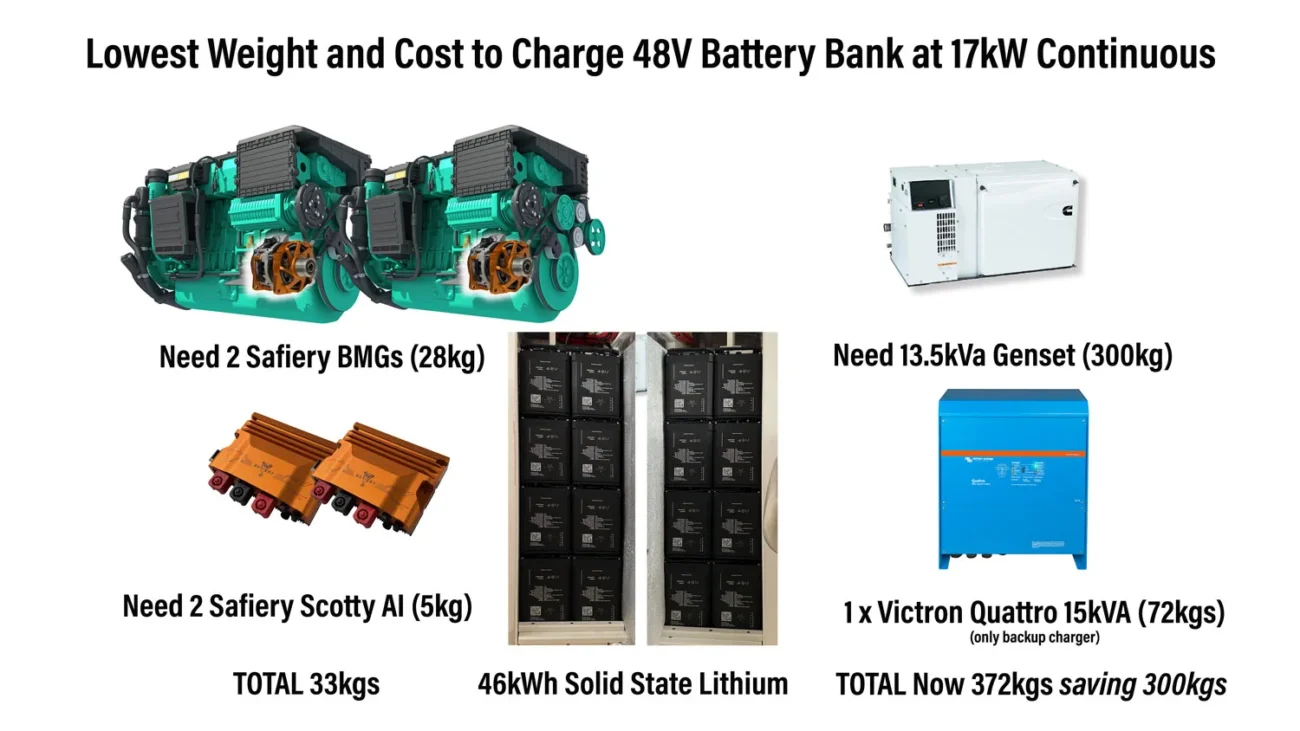
The BMG appears as an alternator on the power-in side of the Victron Cerbo GX and Ekrano GX display. Two BMG units connected as Master and Slave can show combined outputs of 17kW or more on the GX display — numbers that were previously associated only with large stand-alone generator sets.
For installers working in the Victron ecosystem, the integration is seamless. The Scotty AI V3 appears in the Victron device list. Charging parameters — bulk voltage, absorption time, float voltage — are set directly in the Scotty AI app and serve as fallback values even when a CAN BMS is connected, providing resilience against CAN network errors.
One important nuance for Victron Lithium battery users: charge current limit and discharge current limit parameters are not passed via NMEA2000, so the battery should be configured as a non-CAN battery in the Victron system while still being connected to the VE.CAN bus. Safiery’s charging algorithms are identical whether operating in CAN or non-CAN mode — no performance difference results from this configuration.
Technical Specifications at a Glance
Parameter | Specification |
Motor type | Claw-pole, dual 3-phase hairpin |
Cooling | Air-cooled |
Motor diameter | 150mm |
Motor length | 155mm (without shaft and pulley) |
Weight | 7.3kg (without OAP) |
Nominal operating voltage | 40V – 57.9V |
Maximum operating voltage | 60V |
Minimum operating voltage | 38V |
Peak output | 10kW @ >5,000 RPM, 20 seconds |
Continuous output | 5kW @ >6,000 RPM |
Maximum speed | 16,000 RPM |
System efficiency (peak) | 85% (net motor + inverter) |
Response time | 150ms without pre-flux |
Voltage accuracy | ±0.5V |
Operating temperature | −30°C to 105°C |
Motor protection | IP25 |
Inverter protection | IP6K9K (with mated connector) |
Hi-pot test | 1,000V DC for 1 second |
BMG vs Traditional Genset: A Size and Weight Revolution
The Safiery BMG system is 95% smaller and lighter than a traditional diesel generator set of equivalent power output. The BMG uses your existing engine — no additional fuel tank, no additional engine maintenance, no additional installation space, no additional sound attenuation to engineer.
Compare a Cummins Onan 10kW marine generator — a unit requiring dedicated engine room space, its own fuel system, its own cooling circuit, its own exhaust — to a BMG mounted on the engine already in the boat, outputting 8,000–11,000W while the vessel is underway.
The Onan offers one advantage: independent operation when the main engine is off. The BMG, by contrast, requires the main engine to be running. For applications where continuous dockside generation is required independently of the propulsion engine, a genset remains relevant. For all other use cases — passage making, anchorage recharging, hotel power while underway — the BMG delivers equivalent or superior power in a fraction of the size and weight, with zero additional fuel consumption and zero additional maintenance burden.
Installation Considerations
Cable Sizing
The 48V positive cable between the BMG and the battery bank should be sized to the cable run length. Typical values for a 5m run are 35mm² cable with a 200A Mega fuse, or 50mm² with a 300A Mega fuse. The fuse should be mounted close to the battery terminal. Safiery provides an NMEA Data Kit with the BMG that includes the data cabling, 120-ohm CAN terminators, and the pre-wired 12V interface harness.
12V Interface — Critical Warning
The BMG microprocessor and motor field control requires a 12V supply on the KL15 (ignition) and KL30 (constant power) terminals. Do not connect 24V or 48V to these terminals under any circumstances. The wiring harness supplied by Safiery is pre-wired and clearly labelled — yellow for KL15 (12V ignition from engine), red for KL30 (12V constant power), black for ground.
Pre-Charge
Some 48V battery packs require a pre-charge function before the BMG’s 48V terminals are connected, to protect against voltage shock during power-on. Check your BMS documentation before completing the 48V circuit.
Belt Tension
The BMG must be tensioned correctly to keep maximum hub load on the pulley block below 2,000N. Proper belt tension is critical — an over-tensioned belt accelerates bearing wear; an under-tensioned belt slips and triggers the BMG’s automatic belt-slip protection (which stops the BMG, waits approximately 5 minutes, and restarts). The over-running auto-clutch pulley standard on SHSA4802 and SHSA4803 models significantly reduces belt stress from load step changes.
Initial Commissioning: Setting Up the BMG on Scotty AI
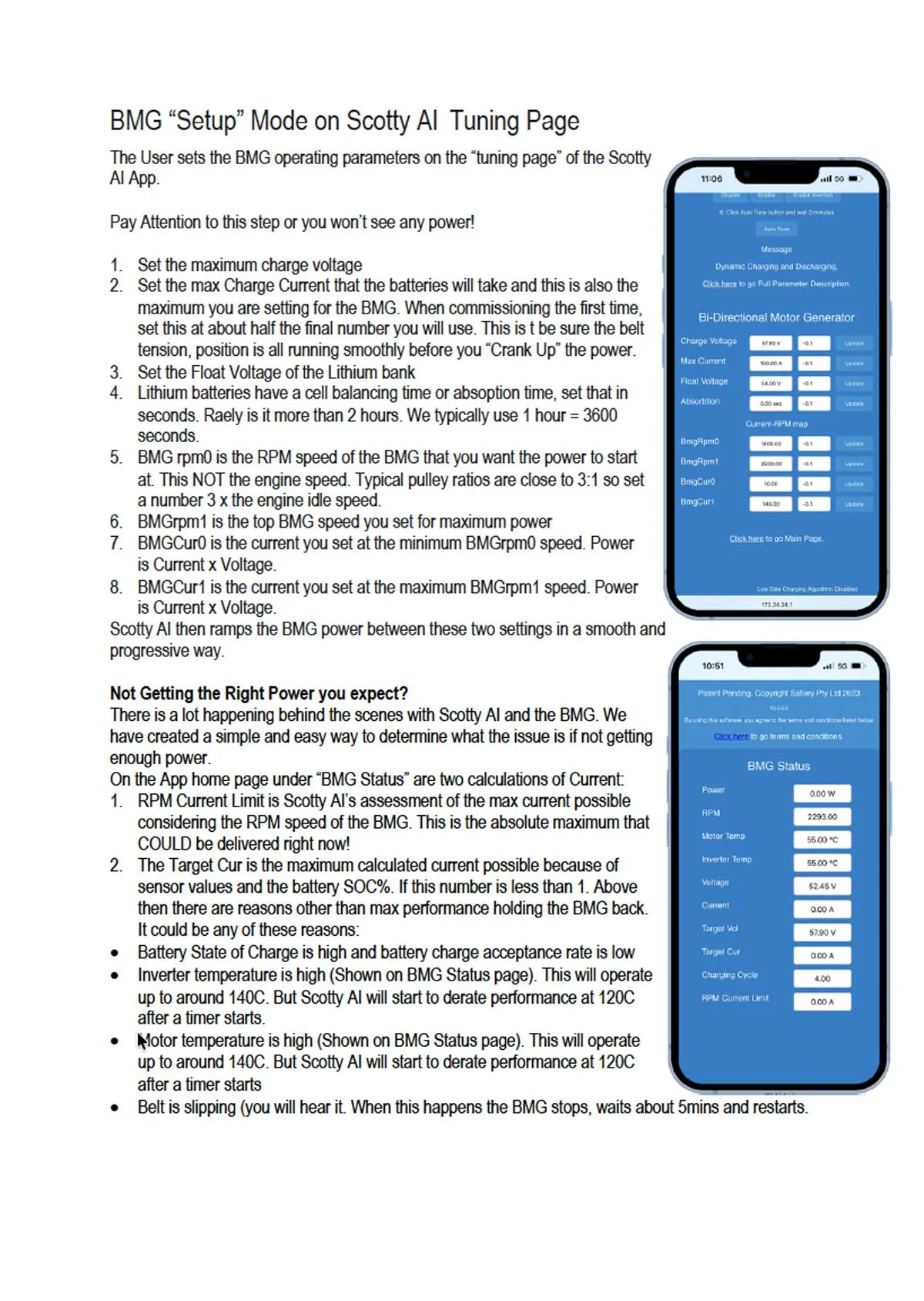
First-time commissioning is performed through the Scotty AI app’s tuning page. Key parameters:
- Maximum charge voltage — set to the maximum voltage of your 48V lithium bank
- Maximum charge current — set to approximately half your target value for initial commissioning while you verify belt tension and mechanical installation
- Float voltage — set to the lithium bank’s float voltage
- Absorption time — cell balancing time in seconds; typically 1 hour (3,600 seconds)
- BMGrpm0 — the minimum BMG speed at which power generation begins (not engine RPM — multiply engine idle RPM by your pulley ratio, typically ~3:1)
- BMGrpm1 — the BMG speed at which maximum power is delivered
- BMGCur0 — the current set at BMGrpm0
- BMGCur1 — the current set at BMGrpm1
Scotty AI ramps power smoothly between these two operating points. If power output is lower than expected, the BMG Status page on the app shows two diagnostic current values: RPM Current Limit (the absolute maximum possible at the current speed) and Target Current (the maximum considering all sensor values and battery SOC). Any difference between these two values points to the constraining factor — battery SOC, inverter temperature, motor temperature, or belt slip.
The Verdict: A New Category of Alternator
The Safiery BMG is not a high-output alternator. It is not a smart alternator. It is not even a generator. It is a new category of machine — a fully digital, AI-managed, bidirectional motor-generator that happens to occupy the same mechanical position as a conventional alternator, while delivering performance that belongs in a completely different era of marine and commercial vehicle power electronics.
For operators running Yanmar, Volvo Penta, Cummins, Caterpillar, or Mercedes-Benz Sprinter engines who need maximum power into a 48V lithium bank, minimum fuel consumption, robust engine protection, and seamless integration with modern energy management systems like Victron, there is currently no competitive product in the same class.
The BMG is designed and manufactured in Australia, tested to automotive-grade reliability standards, and delivered to vessel operators and vehicle builders worldwide.