


ABYC E-13 Compliant Marine Lithium Battery Without the Complexity
Marine lithium batteries built to ABYC E-13 standards deliver reliable power, full insurance acceptance, and professional-grade safety—without forcing you to become an electrical engineer.
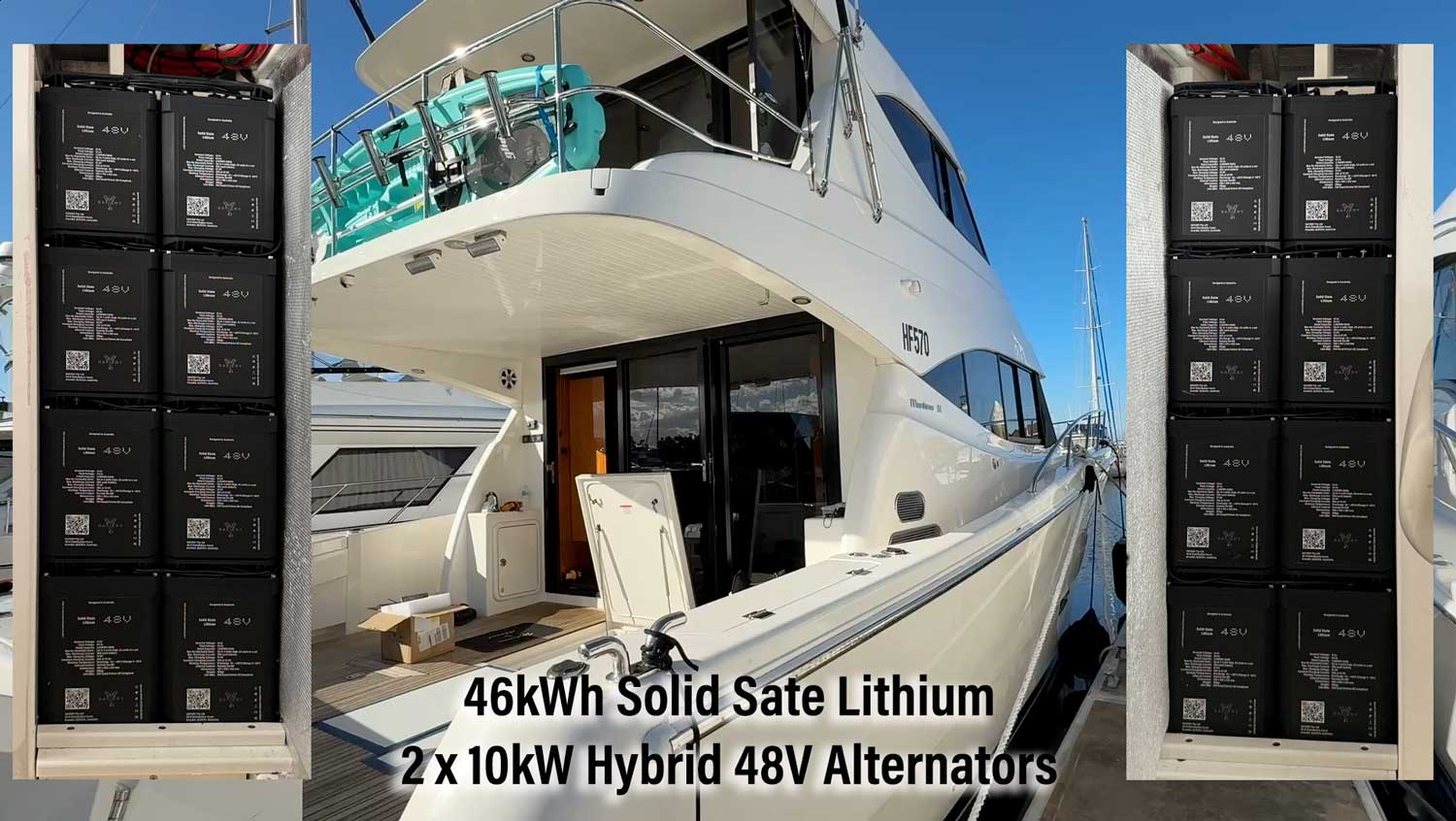
Finally, a Marine Lithium Battery System Built for Serious Boaters
If you’ve dealt with lead acid batteries that fail mid-season, power systems that leave surveyors shaking their heads, or “marine-rated” lithium that your insurer won’t touch, you understand the frustration. Most marine batteries on the market either lack proper certifications, come with inadequate documentation, or require complex workarounds to meet safety standards. Safiery lithium marine batteries are engineered to replace traditional lead-acid batteries, meeting stringent safety and compliance requirements for marine use.
Safiery marine lithium batteries eliminate that frustration. Built from the ground up for ABYC E-13 compliance, our systems deliver all the benefits of lithium iron phosphate chemistry—superior cycle life, high energy density, and reliable energy in harsh marine environments—with complete safety peace of mind and the documentation surveyors and insurers actually require. Lithium marine batteries are designed with safety in mind, featuring advanced protective features such as internal Battery Management Systems (BMS) that prevent overcharging and over discharging, making lithium batteries safe and reliable for marine applications.
No more cobbling together components hoping they’ll pass inspection. No more wondering whether your battery management system will protect your vessel. Just proven, certified marine power that works.
Why Safiery Marine Lithium Batteries Work
Here’s what separates a properly engineered marine lithium system from everything else on the market:
Full ABYC E-13 Compliance – UL 1642 certified lithium cells, comprehensive BMS protection, and overcurrent devices that meet the 2025 standard requirements including provisions for battery banks exceeding 500 amp hours
Advanced NXP S32K358 ASIL D BMS Platform – Our battery management system BMS provides full CAN communication, pre-disconnect warnings, and active charge source control—exactly what E-13 recommends for safe and stable chemistry management
LiFePO4 Chemistry for Marine Safety – Lithium iron phosphate delivers superior thermal stability and resistance to thermal runaway, making it the safest lithium technology for boats that operate in demanding conditions such as vibration, moisture, and salt exposure
Integrated Thermal Management – Temperature sensors, cooling provisions, and thermal runaway prevention systems work together to maintain optimal performance across temperature extremes, ensuring the best performance of your marine lithium battery system
Professional Documentation Package – Complete certification records, installation guidance, and compliance documentation that surveyors and insurance companies require—because missing paperwork kills more installations than missing features
Instead of forcing you to source separate components and hope they integrate properly, Safiery delivers a complete battery system engineered for marine applications from cell to terminal.
How Marine Lithium Installation Works
Getting from lead acid batteries to a compliant lithium marine system doesn’t require complexity. The process follows ABYC guidelines at every step.
Step 1: System Assessment and Planning
Evaluate your current electrical system and power requirements. Determine your daily amp hour consumption—house loads, trolling motors, air conditioning, navigation electronics—and establish the battery bank capacity needed for your typical usage plus reserve. Consider where batteries will mount, ensuring adequate ventilation and accessibility for the integrated BMS monitoring.
ABYC E-13 applies to lithium power systems with 600 watt-hours or greater capacity. For most recreational and commercial vessels, this means your house bank and potentially your starting battery systems fall under these requirements.
Step 2: Professional Installation
Install ABYC-compliant mounting systems that secure batteries against marine motion and vibration. Configure overcurrent protection per E-13 requirements—for banks exceeding 500 amp hours, this means properly sized fuses inline before each battery’s output joins the rest of the bank.
Connect BMS communication to your charging systems. The Safiery solid-state BMS communicates via CAN protocol with alternators, shore power chargers, and solar controllers, enabling coordinated charging with appropriate voltage levels and temperature compensation.
Implement output disconnect devices as required by E-13—physical disconnection capability that operates when the battery system reaches maximum specified discharge rate, not just software-controlled shutoffs.
Step 3: System Commissioning and Testing
Introduction to Sustainable Boating
Verify all safety systems function correctly. Test BMS communication protocols and confirm pre-disconnect warnings operate as designed. Validate charging algorithms and temperature compensation features with your specific charging sources.
Document everything. Generate compliance certificates, record test results, and compile the manufacturer documentation package that proves your installation meets ABYC E-13 requirements.
Maintenance and Best Practices for Marine Lithium Batteries
Proper maintenance – that’s the golden key I’ve discovered after years of chasing the perfect energy solution on the water! When I first got into marine lithium batteries, I thought I’d found my Holy Grail. But like any beautiful relationship, it takes nurturing to unlock the full potential and ensure years of reliable energy on the water. Here’s what I learned the hard way: while lithium batteries require far less babying than those old lead acid dinosaurs, a few simple best practices will help you achieve optimal performance and extend cycle life—even when Mother Nature throws her worst at you in demanding marine environments.
Monitor Regularly with Your BMS – Your Digital Guardian Angel:Let me tell you about your battery management system (BMS) – it’s like having a brilliant guardian angel watching over your power 24/7! This incredible system continuously monitors cell voltages, temperatures, and charge/discharge cycles with the precision of a Swiss watch. I’ve made it my daily ritual to check my BMS dashboard or app for any alerts or unusual readings. When I first discovered modern systems, like those from Safiery, providing real-time data and pre-disconnect warnings – man, I had tears in my eyes! You’re always informed about your battery’s health, like having a conversation with an old friend who knows exactly what you need.
Charge Correctly for Maximum Longevity – The Art of Perfect Timing:Here’s where I learned my most expensive lesson early on: lithium batteries absolutely thrive when you treat them right with compatible systems set to the correct voltage profiles. I still cringe thinking about my rookie mistake of using old lead acid chargers with float or equalization modes – it’s like feeding a racehorse hay when it needs premium oats! These relics can slash your lithium battery life faster than you can say “dead battery.” Instead, I now swear by chargers and alternators that actually communicate with your BMS, delivering the right charge at exactly the right time. It’s this beautiful dance of technology ensuring safe and efficient energy replenishment.
Avoid Deep Discharge When Possible – Don’t Push Your Luck:Now here’s something that took me years to fully appreciate: while lithium batteries are absolute warriors designed for deep cycle use and can safely discharge to much lower levels than their lead acid cousins, regularly running them to absolute minimum capacity is like constantly redlining your engine. You’re shortening their lifespan unnecessarily! Through trial and plenty of error, I’ve learned that for best results, you want to keep your battery bank above 20% state of charge whenever possible. This is especially critical during those extended trips or when you’re running high-demand systems like air conditioning or trolling motors that are just hungry for power.
Store Smart for Extended Periods – The Winter Sleep Strategy:If your boat will sit unused for longer periods – and let’s face it, winter can feel eternal when you’re dreaming of open water – I’ve discovered the secret to storing your lithium batteries. Keep them at a partial state of charge, typically around 50-70%. This isn’t just some random number; it’s like putting your batteries into the perfect hibernation state that helps preserve cycle life and ensures they’re ready to spring into action when boating season returns. The BMS will continue its vigilant protection during storage, but I still recommend those periodic check-ins – old habits from my lead acid days that actually make sense!
Keep Connections Clean and Dry – Fighting the Salt Monster:Marine environments are absolutely brutal on electrical systems – I learned this the expensive way more than once! I’ve made it my obsession to regularly inspect terminals and connections for corrosion or salt buildup, ensuring all wiring remains tight and secure. It’s like dental hygiene for your electrical system. Those IP-rated enclosures and marine-grade terminals, standard on Safiery batteries, provide incredible protection, but nothing beats a quick visual check. I’ve caught issues that could have sunk my whole system just by taking a minute to look around.
Let the BMS Do the Heavy Lifting – Your Automated Maintenance Guru:This is where I get genuinely excited about lithium battery technology – the integrated BMS is like having a PhD-level engineer working for you around the clock! After decades of manually babysitting lead acid batteries, discovering that the BMS automatically balances individual cells, prevents overcharging and deep discharge, and protects against short circuits or temperature extremes was revolutionary. It delivers all the incredible benefits of lithium chemistry with minimal intervention from me. It’s technology doing what technology should do – making our lives better!
By following these best practices that I’ve learned through years of real-world experience, you’ll enjoy the highest degree of safety, performance, and longevity from your marine lithium batteries. With proper care and the advanced protection of a quality BMS watching your back, your battery system will deliver reliable power for over a decade. That means you stay focused on what really matters – the adventure ahead, not on battery maintenance. Trust me, there’s nothing quite like the peace of mind that comes from knowing your power system has your back when you’re out there chasing the horizon.
What Makes Safiery Different
Most lithium battery suppliers focus on specifications. We focus on what actually matters for marine installations: compliance, documentation, and long-term reliability.
Certified to Standards That Matter – Our systems meet UL 1642 cell certification, align with UL 1973 for marine applications, and satisfy ABYC E-13 requirements. We also consider ISO 10133 for international compliance and DNV certification relevant for commercial vessels. This isn’t marketing language—it’s verifiable testing and documentation.
BMS Architecture Built for E-13 – ABYC strongly favours systems with active BMS communication, pre-disconnect warnings, and charge source control. Our NXP S32K358 ASIL D platform delivers exactly that architecture, with monitoring of individual cell voltages, cell balancing, and protection against deep discharge and overcharging.
Australian Engineering for Harsh Conditions – Designed and manufactured to withstand salt spray, temperature extremes, vibration, and the moisture exposure that defines the harsh marine environment. IP-rated enclosures and marine-grade terminals are standard.
Charging System Integration – Compatible with alternators, shore power, and solar systems. Our BMS coordinates with charging sources to prevent the alternator damage that occurs when other systems disconnect under load without warning.
Documentation Your Surveyor Will Accept – Full specification sheets including short-circuit current ratings, BMS disconnect thresholds, safe operating temperature limits, and installation requirements. The paperwork gaps that sink other installations don’t exist with Safiery systems.
Proof That It Works
Results from marine installations demonstrate what properly engineered lithium batteries deliver:
Cycle Life Performance: LiFePO4 chemistry delivers 3,000 to 5,200 cycles at 80% depth of discharge under proper conditions—compared to 200-500 cycles for typical lead acid batteries at similar discharge levels. At 50% deep cycle usage, expect 8,000+ cycles. Calendar life extends over a decade with appropriate care.
Usable Capacity: Marine lithium batteries provide 80-90% usable capacity versus approximately 50% for lead acid. This means a 100Ah lithium bank delivers more usable energy than a 150Ah lead-acid bank while lowering total weight significantly.
Insurance Acceptance: Vessels equipped with ABYC E-13 compliant Safiery systems consistently receive surveyor approval and insurance acceptance. Complete documentation eliminates the back-and-forth that delays coverage.
Real-World Durability: Field installations show Safiery systems maintaining rated capacity after extended use in demanding conditions—salt exposure, temperature cycling, high discharge rates from trolling motors and onboard systems.
Who It’s For
Safiery marine lithium batteries serve boaters who need reliable power without certification headaches:
Yacht Owners Requiring Insurance Compliance – If your surveyor or insurer requires ABYC E-13 compliant electrical systems, our documentation package provides exactly what they need to approve your installation
Commercial Vessel Operators – Workboats, charter vessels, and commercial operations need certified marine power solutions that meet DNV and classification society requirements along with ABYC standards
Serious Recreational Boaters – Extended cruising, offshore passages, and longer periods away from shore power demand deep cycle battery technology that delivers reliable energy without the weight and maintenance of lead acid
Marine Electricians and Boat Builders – Professionals seeking ABYC-compliant components with proper documentation and technical support for installation in new builds and refits
If you want longer runtime, fuel efficiency gains from lowering total weight, and complete safety peace of mind with your marine power system, Safiery was built for your application.
System Configurations and Pricing
Choose the configuration that matches your vessel and power requirements. Safiery offers a comprehensive range of marine lithium battery systems and chargers, designed to suit various vessel types, application needs, and environmental conditions.
Recreational Marine Package
12V systems designed for smaller vessels, fishing boats, and coastal cruisers. Includes integrated BMS with convenient cell voltage monitoring, standard charging compatibility with most marine alternators and shore power systems, and bluetooth versions for remote monitoring.
Ideal for replacing deep cycle battery banks up to 400Ah. Capacity options available in 12v 100ah modules configured in parallel config for larger banks.
Contact for current pricing and availability.
Professional Marine Package
24V and 48V systems for larger yachts, commercial vessels, and high-demand applications. Advanced BMS with full CAN communication enables integration with vessel management systems, alternator regulators, and shore power converters.
Includes remote monitoring capabilities, pre-disconnect warning systems per E-13 recommendations, and complete compliance documentation for surveyor review.
Designed for serious cruisers, charter operations, and commercial marine applications requiring reliable power for extended use.
Contact for system design consultation and pricing.
Custom Marine Solutions
Engineered systems for specific vessel requirements. Full design services including load analysis, battery bank sizing, charging system integration, and installation planning.
Includes ongoing maintenance support, software updates for BMS firmware, and technical assistance for your marine electrician.
Custom pricing based on system specifications and support requirements.
Frequently Asked Questions
What is ABYC E-13 and why does it matter for my boat?
ABYC E-13 is the American Boat and Yacht Council’s standard for onboard lithium battery systems, first released in 2022 with significant updates in 2025. It defines requirements for cell certification, battery management, charging behaviour, wiring, and installation practices. While technically voluntary, most insurance companies reference E-13 when approving policies. A compliant installation dramatically simplifies surveyor approval and insurance acceptance.
How do I know if my current charging system is compatible?
Most marine alternators and shore power chargers can work with LiFePO4 batteries, but require appropriate voltage settings and charging algorithms. Lead-acid chargers with float or equalization modes may overcharge lithium cells. During system assessment, we evaluate your existing charging sources and recommend any modifications needed for safe, optimal performance. The Safiery BMS communicates with compatible regulators to coordinate charging automatically.
What happens if the BMS disconnects while the alternator is running?
This is a legitimate concern with many lithium installations. When a battery BMS disconnects under load, alternator field collapse can generate damaging voltage spikes. Safiery’s BMS addresses this through pre-disconnect warnings and CAN communication with compatible alternator regulators, allowing coordinated shutdown rather than abrupt disconnection. E-13 recommends against the common practice of permanently paralleling a lead acid battery as a spike absorber—our communication-based approach is the standard-compliant solution.
How long do marine lithium batteries last compared to lead-acid?
Under typical marine use, LiFePO4 batteries deliver 6-10 times the cycle life of lead acid batteries. At 80% depth of discharge, expect 3,000-5,200 cycles retaining 80% capacity. Lead-acid batteries typically provide 200-500 cycles at similar discharge levels. Combined with higher usable capacity per amp hour, the total cost of ownership strongly favours lithium despite higher initial investment. Many installations remain in service over a decade.
Can I install these batteries myself or do I need a professional?
ABYC E-13.5.2 specifies that you should always adhere to your battery manufacturer’s installation guidance. While our documentation supports competent DIY installation, we recommend professional installation for most vessels—particularly those requiring insurance compliance. Marine electrical work involves safety considerations that benefit from professional expertise. We provide technical support for both DIY installations and professional installers.
Will my boat insurance accept lithium battery installations?
Insurance acceptance depends on proper certification and documentation. E-13 compliant installations with complete manufacturer documentation typically receive approval. Common rejection reasons include missing cell certifications, inadequate BMS specifications, lack of overcurrent protection documentation, or improper installation. Safiery systems include the full documentation package insurers and surveyors require, eliminating the paperwork issues that delay or prevent coverage.
Get Started with Compliant Marine Lithium Today
Your vessel’s electrical system is fundamental to safety and enjoyment on the water. Lead acid batteries served marine applications for decades, but lithium iron phosphate technology now delivers superior performance with the certification framework to satisfy safety standards, surveyors, and insurers.
Safiery marine lithium batteries provide the battery technology your boat deserves: safe and stable chemistry, integrated BMS ensures protection, and documentation that proves compliance—not just claims it.
Take the first step:
Request a free consultation for system design and compliance assessment. We’ll evaluate your power requirements, review your existing charging systems, and recommend the configuration that delivers reliable power for your specific application.
Contact our marine systems team to discuss your project. Whether you’re replacing failing lead acid batteries, upgrading for extended cruising, or specifying systems for new construction, we’ll help you navigate the path to compliant, reliable marine lithium power.
No pressure. No obligation. Just straightforward guidance from engineers who understand both the technology and the standards.